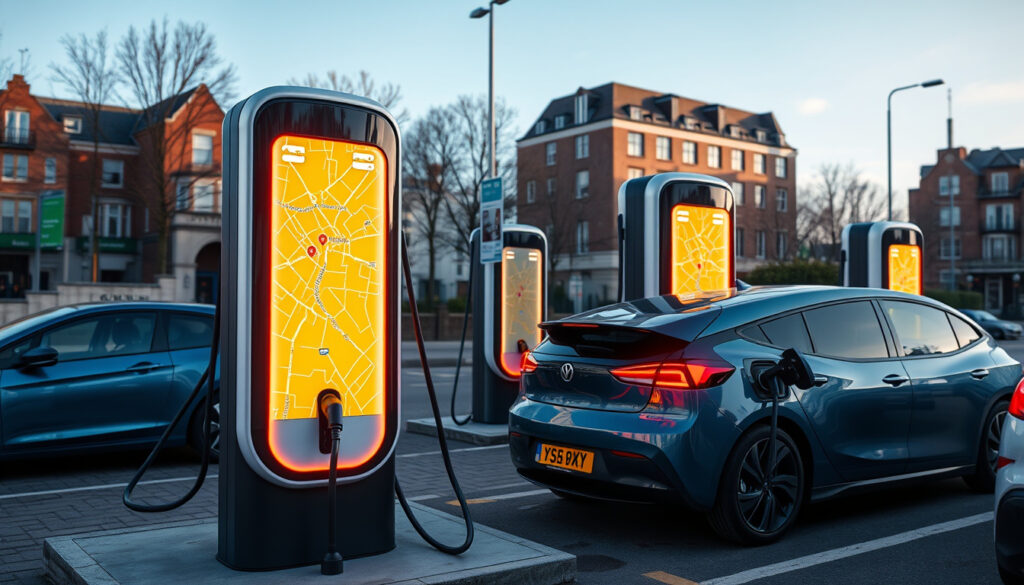
EV Charging Stations Near Me – Live Maps and Fast UK Options
Finding reliable EV charging stations nearby has become significantly easier as the UK’s charging network expands across major cities and motorway routes. With over 100,000 charging points now mapped across the country and more than 15,500 rapid chargers operating at 100kW or higher, drivers have increasingly accessible options for keeping their electric vehicles powered up. Whether you’re searching for a fast charger right now, a free option at a local supermarket, or guidance on which app provides the most accurate real-time data, understanding the current landscape helps you make informed decisions on the road.
This guide covers the essential tools, networks, and practical strategies for locating EV charging stations in the UK, with particular focus on London, Manchester, and the surrounding areas where charging density continues to grow rapidly.
EV Charging Stations Near Me Open Now
Locating available charging points in real time requires using specialised apps that aggregate live data from multiple networks. Rather than relying on static maps or individual network sites, combining two or three dedicated applications gives drivers the most accurate picture of what is open and accessible right now. The approach works particularly well for spontaneous charging needs or when a journey requires unexpected stops along the route.
Zapmap and ChargeFinder provide the widest UK coverage with live availability filters for rapid and ultra-rapid chargers.
Networks like InstaVolt, GRIDSERVE, and GeniePoint offer chargers from 100kW up to 350kW for sub-30-minute charges.
Pod Point hosts over 9,200 bays at supermarkets, many with no cost to drivers, including locations across London and Manchester.
London and Manchester have high charging density at retail parks, motorway services, and supermarkets across both cities.
- The UK has more than 100,000 mapped charging points and over 15,500 rapid chargers operating at 100kW or higher as of 2024.
- InstaVolt represents the largest independent rapid network with more than 2,125 devices and a reported 99.4% uptime.
- Pod Point manages over 9,200 destination bays at supermarkets including Tesco and Lidl, with many offering free charging.
- GRIDSERVE operates ultra-rapid chargers up to 350kW at more than 190 motorway and retail locations across the UK.
- Charging costs typically range from 49p to 90p per kWh depending on network, speed, and time of day, with off-peak savings available.
- A full charge can cost between £25 and £30 more depending on which network and pricing tier you use compared to the cheapest available option.
- Scotland maintains more than 2,600 government-supported charging points, many offering free rapid charging, making it a leader in public charging infrastructure.
| Charger Type | Speed Range | Common Locations | Typical Cost |
|---|---|---|---|
| Slow | Up to 7kW | Home, workplace, some car parks | Free to paid |
| Fast | 7-22kW | Supermarkets, shopping centres, hotels | Often free or per kWh |
| Rapid | 25-100kW | Motorway services, retail parks | Paid per kWh |
| Ultra-rapid | 100kW+ | Motorways, dedicated EV hubs | Paid per kWh |
Rapid and Fast Charging Points Near Me
Ultra-rapid charging at 100kW or higher represents the fastest practical option for drivers needing a quick top-up during longer journeys. These chargers can deliver an 80% charge in approximately 20 to 30 minutes depending on vehicle capability and current battery level. The network of ultra-rapid chargers has grown substantially, with around 15,500 now operating UK-wide as of late 2024, a figure that continues to rise as operators invest in expanding capacity along major routes.
Major Ultra-Rapid Networks
InstaVolt operates the largest independent rapid network in the country with more than 2,125 devices capable of delivering up to 160kW. The network maintains a claimed 99.4% uptime and accepts contactless payment without requiring app registration, making it particularly convenient for occasional users. Pricing runs at 85p to 87p per kWh, though an off-peak rate of 54p applies between 10pm and 6am for drivers able to plan charging around these hours.
GRIDSERVE provides ultra-rapid charging up to 350kW across more than 1,500 bays at over 190 motorway and retail locations. Their EV forecourts offer dedicated facilities designed specifically for electric vehicle charging rather than adapting existing petrol station infrastructure. Costs range from 49p to 79p per kWh depending on location, making GRIDSERVE one of the more competitively priced options for high-speed charging.
Understanding Charging Speeds and Vehicle Compatibility
Not all electric vehicles can accept the maximum output available from ultra-rapid chargers. Most newer models support 100kW or higher charging, but older vehicles or certain compact models may be limited to 50kW or less even when connected to a faster charger. Checking your vehicle’s maximum charging capability before selecting a charger helps avoid disappointment and ensures you connect to an appropriate speed tier.
Your vehicle’s maximum charging rate determines actual charge time. Even at a 350kW charger, a car limited to 50kW intake will charge at 50kW. Always verify your model’s capability in the vehicle settings or documentation.
GeniePoint operates chargers up to 350kW at Morrisons supermarkets across the UK, providing a convenient option for drivers already planning supermarket visits. Coverage extends to both London and Manchester store locations, allowing drivers to combine shopping with charging without dedicated stops. Costs typically fall between 83p and 90p per kWh.
Duracell E-Charge represents a newer entrant to the ultra-rapid market with investment exceeding £200 million to build an expanding network capable of up to 300kW output. Their growing urban presence provides additional options for drivers in major cities, though the network remains less established than longer-running operators.
Free Electric Car Charging Points Near Me
Finding genuinely free charging points requires knowing which networks and locations offer no-cost options, and understanding that free rapid charging at high speeds remains rare due to the infrastructure costs involved. Most free charging occurs at destination chargers where drivers already plan to spend time, such as supermarkets, hotels, or retail parks, rather than at rapid motorway hubs.
Supermarket and Retail Charging Networks
Pod Point maintains more than 9,200 bays across the UK with substantial presence at Tesco, Lidl, McDonald’s, and Premier Inn locations. Many of these points offer free charging, making them attractive for drivers who can incorporate a shopping trip or meal stop into their charging routine. Real-time availability status helps identify which bays are currently free, and automatic payment processing removes the need for separate registration.
Free charging points cluster heavily at supermarkets and retail destinations rather than motorways. Planning a shopping trip around a charging stop often proves more effective than searching for free rapid chargers on trunk routes.
ChargePlace Scotland operates more than 2,600 charging points supported by government investment, with many offering free rapid charging access. However, this network focuses primarily on Scotland, making it less relevant for drivers in England. The initiative represents Scotland’s leading position in public charging infrastructure but provides limited benefit for those primarily travelling in England, Wales, or Northern Ireland.
Finding Free Points Using Apps
Both Zapmap and ChargeFinder include filters specifically for free charging points, allowing drivers to restrict search results to locations with no cost. These filters work alongside location and speed filters, enabling targeted searches for free rapid points within a specific radius. The combination helps drivers identify the most relevant free options for their immediate needs without scrolling through paid alternatives.
InstaVolt offers off-peak pricing at 54p per kWh between 10pm and 6am, representing the most cost-effective option for drivers willing to charge during unsocial hours. This approach reduces costs significantly compared to peak-rate charging while still accessing a reliable, high-uptime network. Using apps to set reminders or schedule charging during these windows helps maximise savings.
OVO Charge Anytime provides an alternative subscription model with monthly fees ranging from £27 to £37.50 covering between 700 and 1,000 miles of driving. Pay-as-you-go rates sit at 14p per kWh, making it competitive for drivers who charge frequently. The network encompasses more than 400,000 chargers across the UK and Europe, providing extensive coverage for regular EV drivers.
Best App for EV Charging Stations UK
Selecting the right app or combination of apps dramatically improves the experience of finding and using public charging points. Each major app brings different strengths, and many drivers benefit from using two or three together rather than relying on a single option. The choice depends on whether you prioritise live availability data, route planning capability, payment integration, or community-verified information.
Zapmap
Zapmap offers the widest UK charging map with real-time status and availability information for thousands of points. The app allows filtering by speed, connector type, and network provider, making it straightforward to locate rapid chargers matching your vehicle’s requirements. Route planning features help drivers incorporate charging stops into longer journeys, and the Zap-Pay system provides access to over 100 different networks through a single account.
The free tier provides sufficient functionality for occasional users, while a premium version at £4.99 per month adds enhanced features including detailed charging history and priority customer support. Community ratings and reviews help identify reliable chargers and flag broken units before you arrive, reducing the risk of wasted stops.
ChargeFinder
ChargeFinder distinguishes itself through live status data for over 100,000 chargers, showing whether each point is available, occupied, or out of order. This real-time information proves particularly valuable when you need to charge now rather than planning ahead. GPS-based filters help identify the nearest free charger or the cheapest available option in your current location.
The app includes pricing updates and notes about parking costs at different locations, helping drivers calculate the true total cost of each charging stop. Smart filters narrow results to free stations or specific speed ranges, enabling quick identification of relevant options.
Pod Point and Alternative Apps
Pod Point focuses on its own network of over 9,200 bays at supermarkets and retail locations, providing real-time status and automatic payment processing for registered users. Many locations offer free charging, making Pod Point particularly valuable for drivers seeking no-cost options at Tesco, Lidl, and similar destinations.
Chargeprice compares pricing across networks and countries, helping drivers find the lowest rates available for rapid charging. PlugShare provides community-sourced information including user reviews, photos, and check-ins that help identify broken chargers or problematic locations before arrival. Both apps work well alongside primary mapping tools rather than replacing them.
Most drivers find success using Zapmap for comprehensive mapping and route planning combined with ChargeFinder for real-time availability checks. Add Pod Point if you frequently shop at Tesco or Lidl locations where free charging is available.
EV Charging Stations Near London and Manchester
Both London and Manchester host high densities of charging infrastructure across different location types, from retail parks and supermarkets to motorway services and dedicated EV charging hubs. Using app-based GPS filters helps drivers locate relevant options within a specific radius of their current position or destination, with different networks concentrating in different areas of each city.
London Charging Coverage
London’s charging network spans multiple types of location including supermarkets, shopping centres, and strategic road connections. Pod Point maintains strong coverage across Tesco and Lidl locations throughout Greater London, providing free destination charging for shoppers. GeniePoint chargers at Morrisons supermarkets offer additional options in areas without Pod Point coverage.
InstaVolt devices appear frequently on the outskirts of London and along major A-roads connecting the city to surrounding areas, providing reliable rapid charging without requiring motorway detours. GRIDSERVE EV forecourts serve major motorway routes approaching London, making them practical for longer-distance travellers entering or leaving the city.
Manchester Charging Infrastructure
Manchester follows a similar pattern with high charging density at retail parks and supermarket locations throughout the metropolitan area. Pod Point coverage extends across major supermarket chains, while GeniePoint provides additional rapid options at Morrisons stores. The city benefits from good motorway connections served by GRIDSERVE and InstaVolt installations on routes including the M6, M60, and M62.
Real-time availability through ChargeFinder and Zapmap helps drivers identify open chargers during busy periods when multiple points may be occupied. Both cities experience high demand during peak hours, making live status checks particularly valuable for avoiding frustrating detours to occupied chargers.
Using GPS Filters for City Charging
All major apps allow location-based searches using GPS data from your device, displaying chargers within a defined radius of your current position. This proves especially useful in urban areas where dozens of options may exist within a short distance, and manually reviewing each would be impractical. Filters for speed, cost, and availability narrow results to relevant options matching your specific requirements.
During peak times in major cities, rapid chargers may experience queuing or full occupancy. Using real-time status tools before departure or en route helps identify alternatives before committing to a specific location.
What the Data Shows and What Remains Uncertain
The charging landscape presents a mix of well-established facts and elements that vary depending on circumstances. Understanding which information is reliable and which requires real-time verification helps drivers make better decisions and avoid relying on potentially outdated data.
| What We Know | What Remains Uncertain |
|---|---|
| UK has over 100,000 mapped charging points and 15,500+ rapid chargers | Exact availability at any given moment requires live verification |
| InstaVolt operates 2,125+ devices with 99.4% claimed uptime | Individual charger reliability may vary from network averages |
| Pod Point hosts 9,200+ bays, many free at supermarkets | Free status may change; always verify before travelling |
| Pricing ranges from 49p to 90p per kWh across networks | Exact costs at specific locations may differ from averages |
| London and Manchester have high urban charging density | Coverage varies significantly between specific neighbourhoods |
| Apps provide real-time status for most major networks | Data freshness depends on network update frequency |
Understanding the UK EV Charging Context
The UK EV charging network has undergone substantial expansion over recent years, driven by both government investment and private sector development. Scotland’s government-supported initiative has created particularly high charging density north of the border, while England has focused on motorway corridors and urban retail locations. This different emphasis reflects distinct travel patterns and infrastructure investment priorities across the nations.
Major network operators continue investing in ultra-rapid capacity, recognising that drivers increasingly expect fast charging without extended waiting times. The gap between slower destination charging and rapid motorway charging continues narrowing as networks add high-speed points. Payment systems have similarly evolved, with contactless options and unified apps reducing the friction previously associated with public charging.
Regulatory requirements and industry standards continue developing, aiming to improve reliability reporting and payment interoperability. These changes should benefit drivers through better information about charger availability and easier access across different networks without requiring multiple accounts or apps.
Key Sources for UK EV Charging Information
Zapmap provides comprehensive UK-wide charging coverage with real-time availability data and route planning tools for electric vehicle drivers.
ChargeFinder offers live status information for over 100,000 chargers across the UK, helping drivers identify available points in real time.
The UK’s rapid charging network has grown to include over 15,500 devices operating at 100kW or higher, with major operators expanding ultra-rapid capacity along motorway corridors.
— Carwow
Finding the Right Charging Solution for Your Needs
Whether you need rapid charging during a motorway journey or free destination charging during a supermarket visit, the UK’s expanding network provides increasingly diverse options for EV drivers. Using a combination of dedicated apps, understanding the strengths of different networks, and verifying availability in real time helps ensure you can locate appropriate charging points whenever needed.
For those looking to compare local services alongside EV infrastructure, resources like Hardware Store Near Me and Eye Test Near Me provide additional context for finding nearby services in different categories.
Frequently Asked Questions
Which apps show EV charging stations near me that are open right now?
ChargeFinder and Zapmap provide real-time availability data showing which chargers are currently available, occupied, or out of order. Both allow GPS-based searches to display nearby options matching your requirements.
What is the fastest EV charging speed available at public stations?
Ultra-rapid chargers operating at 100kW and above provide the fastest practical public charging. GRIDSERVE offers up to 350kW at selected locations, while InstaVolt provides up to 160kW across its network of over 2,125 devices.
How can I find the cheapest EV charging stations near me?
Using apps like Chargeprice to compare pricing across networks helps identify the lowest rates. InstaVolt offers off-peak pricing at 54p per kWh between 10pm and 6am. Pod Point provides free charging at many supermarket locations.
Where can I find car charging stations near me in London and Manchester?
Both cities have high charging density at supermarkets, retail parks, and motorway services. Pod Point covers Tesco and Lidl locations, GeniePoint serves Morrisons stores, and InstaVolt provides rapid charging on city outskirts and major A-roads.
Are there free electric car charging points available in the UK?
Free charging exists primarily at destination locations such as supermarkets, with Pod Point offering many free bays at Tesco and Lidl. ChargePlace Scotland provides free charging at over 2,600 points, though primarily in Scotland.
What is the difference between fast and rapid EV charging?
Fast charging typically operates at 7-22kW and is suitable for longer stops at destinations like supermarkets. Rapid charging runs at 25-100kW or higher, delivering 80% charge in 20-30 minutes and suits motorway stops and time-limited situations.
More related posts
 Indeed Jobs Stoke On Trent – Full-Time, Part-Time, Immediate Starts
 Theatre Royal Drury Lane – Seating Plan Best Seats Guide
 Isa Guha – From England Cricketer to Leading Broadcaster
 B&Q Newtownabbey – Opening Hours, Address and Products
 Greg James – Age, Wife, Height, Salary and Career
 Tapi Carpets & Floors – Reviews, Prices, Stores and Fitting Guide
 England v Spain Women – Date, Ticket , TV & Re ult
 Cayton Bay Holiday Park – Touring, Reviews & Christmas Events 2025
