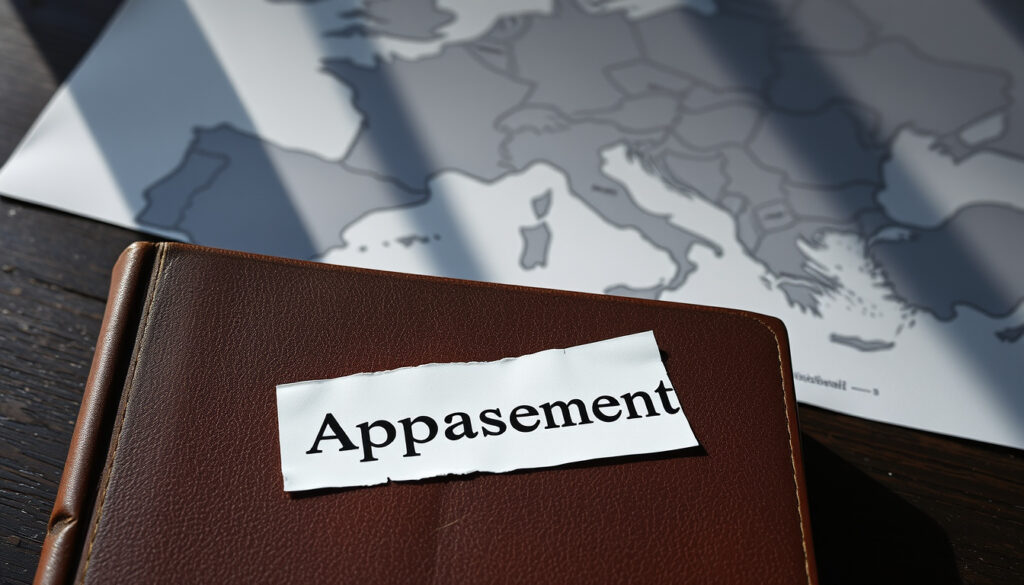
Neville Chamberlain – The Story of Appeasement and His Complex Legacy
Neville Chamberlain served as British Prime Minister from 1937 to 1940, a period that saw Europe descend into the most devastating war in history. His name is forever linked to the policy of appeasement and the infamous “Peace for our time” declaration he made after meeting with Adolf Hitler in Munich. While his efforts to avoid conflict ultimately failed, the full story of his life, his motivations, and his legacy is far more complex than the single label of “appeaser” suggests.
Chamberlain came to power during a time of deep public exhaustion from World War I. His decisions, shaped by this context, remain a central topic of debate among historians. This article explores his key policies, his final days, and how his reputation has evolved over the decades.
What Was Neville Chamberlain’s Role in Appeasement and the Outbreak of World War II?
Chamberlain’s foreign policy was dominated by a single, overriding goal: to prevent another major European war. The strategy he adopted was appeasement, which involved making concessions to aggressive powers, most notably Nazi Germany, in the hope of satisfying their demands and securing lasting peace.
Neville Chamberlain at a Glance
| Attribute | Detail |
|---|---|
| Full Name | Arthur Neville Chamberlain |
| Born | 18 March 1869, Birmingham, England |
| Died | 9 November 1940, Heckfield, Hampshire, England |
| Cause of Death | Bowel cancer |
| Political Party | Conservative |
| Known For | Appeasement policy, ‘Peace for our time’ speech |
| Government | Prime Minister (1937-1940) |
Key Insights into Chamberlain’s Foreign Policy
- Chamberlain’s appeasement policy, while widely criticized after WWII, was initially supported by the British public and several other European leaders in the 1930s. The memory of WWI led to widespread pacifism. Chamberlain believed Hitler’s demands were reasonable until the invasion of Czechoslovakia in March 1939.
- Chamberlain not only declared war on Germany in September 1939, but he also oversaw crucial domestic preparations for war, including a massive military expansion. He introduced conscription for the first time in peacetime in April 1939 and increased defense spending.
- Chamberlain resigned in May 1940 after the disastrous Norway campaign, but he remained a powerful figure in Churchill’s War Cabinet until his death from cancer later that year.
- Chamberlain came from a prominent political family; his father was Joseph Chamberlain and his half-brother was Austen Chamberlain, both notable politicians.
Key Facts About Neville Chamberlain
| Fact | Source |
|---|---|
| Prime Minister from May 1937 to May 1940. | Britannica |
| Leader of the Conservative Party from 1937 to 1940. | Wikipedia |
| Signed the Munich Agreement in September 1938, ceding the Sudetenland to Germany. | gov.uk |
| Announced the ‘Peace for our time’ declaration upon returning from Munich. | UK Parliament |
| Declared war on Germany on 3 September 1939. | Wikipedia |
| Succeeded by Winston Churchill as Prime Minister. | Britannica |
| Diagnosed with bowel cancer in July 1940; died in November 1940. | History Hit |
| His father, Joseph Chamberlain, was a major political figure. | gov.uk |
What Was Neville Chamberlain’s Cause of Death and What Were the Key Facts of His Life?
Neville Chamberlain died on 9 November 1940 at his home in Heckfield, Hampshire. He was 71 years old. The official cause of death was bowel cancer, a diagnosis he had received only a few months earlier in July 1940, shortly after his resignation as Prime Minister. For more on his later years, see the detailed biography of the Prime Minister.
Chamberlain was born into a prominent political family, the son of Joseph Chamberlain and half-brother of Austen Chamberlain, both significant figures in British politics. He entered Parliament relatively late, first being elected as an MP in 1918 at the age of 49.
Early Life and Career
Before entering politics, Chamberlain successfully ran a sisal plantation in the Bahamas for several years. Upon returning to England, he entered business in Birmingham before being elected as the Member of Parliament for Birmingham Ladywood in 1918. He held several key ministerial posts before becoming Prime Minister, including Minister of Health, where he was recognized as a capable administrator and a committed domestic reformer, and Chancellor of the Exchequer.
What was Neville Chamberlain’s religion?
Chamberlain was a Unitarian, a fact documented in primary sources. His religious beliefs were part of his personal background but are not typically cited as a major driver of his political policies.
What Was Neville Chamberlain’s Legacy and His Role in the Conservative Party?
Chamberlain was a member of the Conservative Party, which he led from 1937 until his resignation in 1940. His legacy is a subject of deep and ongoing historical debate. His name became synonymous with appeasement, a policy widely viewed as a failure that allowed Hitler’s Germany to become powerful enough to launch World War II.
While his foreign policy is often criticized, some historians argue that Chamberlain should be remembered for more than just the Munich Agreement. He was a diligent domestic reformer and some contend that his policies bought Britain crucial time to rearm, particularly in terms of aircraft production and the development of radar, before the full outbreak of war.
Why did Chamberlain resign as Prime Minister?
Chamberlain resigned on 10 May 1940 following the failure of the British campaign in Norway. The military debacle led to a loss of confidence in his leadership within Parliament, prompting the famous Norway Debate. He was succeeded by Winston Churchill, who formed a coalition government. Despite his resignation, Churchill kept him in the War Cabinet as Lord President of the Council until his final illness forced him to step down. You can read more about the context of his resignation and the Norway Debate.
What Was the Context of Neville Chamberlain’s ‘Peace in Our Time’ Speech?
The phrase “Peace for our time” is the most famous line associated with Neville Chamberlain. He uttered it on 30 September 1938, upon returning from Munich where he had signed the agreement with Hitler that effectively ceded the Sudetenland region of Czechoslovakia to Germany.
The speech was a moment of tremendous national relief. The British public, still haunted by the horrors of the First World War, widely celebrated the news. Chamberlain waved the agreement, declaring that it meant “peace for our time.” This hope, however, was shattered less than a year later when Hitler’s forces invaded the rest of Czechoslovakia in March 1939, proving that his promises were worthless.
The Munich Agreement was not a success. While it temporarily avoided war, it allowed Germany to strengthen its military position and absorb vital industrial resources. It is now widely regarded as a catastrophic diplomatic failure that emboldened Hitler. Churchill famously criticized the policy, stating, “He is an appeaser, who feeds the crocodile, hoping it will eat him last.”
Did Neville Chamberlain Have Any Military Service or Role in World War I?
Neville Chamberlain did not serve in the military during World War I. He was 45 years old when the war broke out in 1914 and was considered too old for active service. However, he contributed to the war effort in a civilian capacity. He served as the Director of National Service in 1916 and 1917, a role in which he was responsible for organizing civilian manpower. His experience in this role was not considered a success, and it was a setback in his early political career.
Timeline of Neville Chamberlain’s Life and Political Career
- 18 March 1869: Born in Birmingham, England.
- 14 December 1918: Elected as MP for Birmingham Ladywood for the Conservative Party.
- 1923: Appointed Postmaster General (first ministerial office).
- 1924-1929: Served as Minister of Health, introducing major domestic reforms.
- 1931-1937: Served as Chancellor of the Exchequer.
- 28 May 1937: Became Prime Minister of the United Kingdom.
- 30 September 1938: Returns from Munich, declares ‘Peace for our time’.
- 15 March 1939: Germany invades Czechoslovakia; Chamberlain’s policy changes.
- 1 September 1939: Germany invades Poland.
- 3 September 1939: Britain declares war on Germany; Chamberlain remains PM.
- 10 May 1940: Resigns as Prime Minister; replaced by Winston Churchill.
- 9 November 1940: Dies from bowel cancer at the age of 71.
Clarifying Certainty vs. Uncertainty in Chamberlain’s Story
| Topic | Established Information | Information That Remains Unclear |
|---|---|---|
| Cause of Death | High: Official records and biographies confirm he died from bowel cancer on 9 November 1940. | None. The cause is definitively documented. |
| Nickname ‘Appeaser’ | High: He is historically defined by the policy of appeasement. | None. This is a widely accepted historical fact. |
| Religious Beliefs | High: Chamberlain was a Unitarian, a fact documented in primary sources. | None. This is a verifiable biographical detail. |
| His Motivation for Appeasement | Medium: It is widely attributed to attempts to avoid war. | Historians debate the mix of hope, diplomacy, and intelligence failures that drove him. Was he naive or a pragmatist buying time? |
| Overall Historical Legacy | N/A (Interpretation) | This is a matter of historical interpretation. Some believe he was naive, others that he bought time for Britain to rearm, and still others point to his domestic achievements. |
Historical Analysis and Context of Neville Chamberlain
The Politics of the 1930s: Why Appeasement Came About
To understand Chamberlain’s choices, one must consider the political landscape of the 1930s. The collective trauma of World War I had created a deep-seated pacifist movement across Britain and France. The Great Depression had weakened economies and made populations wary of the costs of another war. Furthermore, the British Empire was strained, and there was a genuine belief, shared by many international leaders, that the Treaty of Versailles had been too harsh on Germany. In this context, negotiating with Hitler appeared to many, not just Chamberlain, as the only sensible course.
Modern Re-Evaluations of Chamberlain
In recent decades, some historians have attempted to rehabilitate part of Chamberlain’s reputation. They point to his significant domestic achievements, such as extensive slum clearance and housing reforms, and his role in preparing the British economy for war. They also argue that, given the state of British military preparedness in the late 1930s, delaying the war was a necessary, if unpalatable, strategic calculation. This view, however, remains a minority opinion against the dominant narrative of a failed policy.
Primary Sources and Key Quotations
“I believe it is peace for our time.”
Neville Chamberlain, 30 September 1938, upon returning from Munich.
“How horrible, fantastic, incredible it is that we should be digging trenches and trying on gas-masks here because of a quarrel in a faraway country between people of whom we know nothing.”
Neville Chamberlain, radio broadcast, 27 September 1939 (declaration of war speech).
“He is an appeaser, who feeds the crocodile, hoping it will eat him last.”
Winston Churchill, criticism of Chamberlain’s policy.
Further Reading and Questions
For those wishing to delve deeper, exploring the life of Winston Churchill, the specifics of the Munich Agreement, or the broader causes of World War II provides essential context. The story of Neville Chamberlain is a powerful lesson in the limits of diplomacy when faced with unmitigated aggression.
Frequently Asked Questions
How old was Neville Chamberlain when he died?
He was 71 years old.
Where is Neville Chamberlain buried?
He is buried in Westminster Abbey in London.
Did Neville Chamberlain have children?
Yes, he had a son, Frank Chamberlain, and a daughter, Dorothy Chamberlain.
More related posts
 Mental Health First Aid – Free UK Online Courses Guide
 Oxford Instruments Share Price – Latest LSE Data and Analysis
 Man United vs Ipswich Town – Head-to-Head History, Stats and Records
 Baseball Caps for Men – Best UK Styles and Deals
 Man Utd Away Kit 2025/26 – Design, Price and Where to Buy
 Foods High in Iron – Sources and Absorption Tips
 Deportivo Alavés vs Real Madrid Stats – Head-to-Head Breakdown
 B&Q Newtownabbey – Opening Hours, Address and Products
