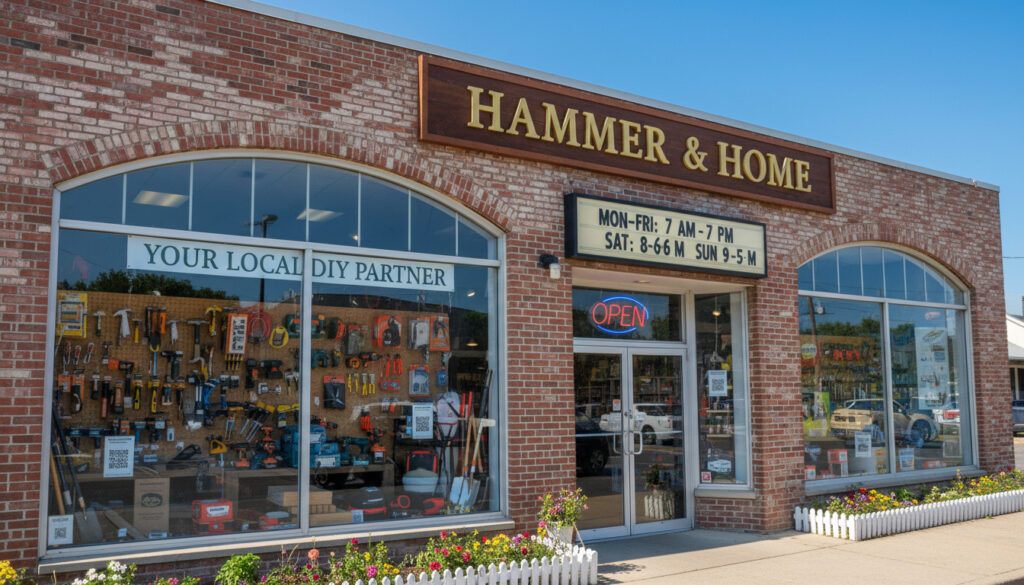
Hardware Store Near Me – Chains, Hours and Finder Guide
Locating a hardware store nearby remains a common search for homeowners, contractors, and DIY enthusiasts facing urgent repairs or planned renovations. While search engines provide immediate proximity results, understanding the structural differences between available chains prevents wasted trips and ensures access to appropriate inventory. Three dominant retailers—Home Depot, Lowe’s, and Ace Hardware—control the majority of the U.S. market, yet their operational models, hours, and target customers differ significantly.
Consumer preference data reveals Home Depot leads with 44% of Americans favoring the chain, followed by Lowe’s at 32%, and Ace Hardware at under 6%, according to surveys aggregated by Today’s Homeowner. Despite Ace’s minimal preference percentage, the cooperative network operates more individual locations than its larger rivals combined, creating a complex landscape of big-box warehouses alongside neighborhood storefronts.
Geographic coverage is nearly universal for the major chains. Business Insider reports that both Home Depot and Lowe’s maintain stores in every U.S. state and Washington, D.C., while Ace Hardware’s decentralized model allows for penetration into smaller markets where corporate big-box stores cannot sustain operations.
How to Find a Hardware Store Near Me
| Chain | Consumer Preference | Typical Hours | Primary Specialty |
|---|---|---|---|
| Home Depot | 44% | 6 AM – 10 PM | Professional contractors |
| Lowe’s | 32% | 6 AM – 9 PM | DIY home improvement |
| Ace Hardware | Under 6% | Varies by location | Local service & handyman |
| Independent stores | Under 2% | Varies widely | Specialized advice |
- Use official locator apps or Google Maps for real-time hours and proximity verification.
- Confirm “open now” status before departure, as independent Ace locations maintain variable schedules.
- Prioritize Home Depot for professional-grade tools, bulk lumber, and contractor-specific services.
- Consider Ace Hardware for in-home repair services unavailable at competing chains.
- Check independent stores for niche hardware and personalized guidance on specialized projects.
- Compare lumber prices via mobile applications, as costs fluctuate significantly by regional supply.
- Verify inventory availability online to avoid out-of-stock disappointments, particularly for high-demand materials.
| Chain | U.S. Store Count | Founded | Annual Sales | Corporate Structure | Primary Customer |
|---|---|---|---|---|---|
| Home Depot | 2,300+ | 1978 | $148.21 billion | Public corporation | Professionals, contractors |
| Lowe’s | 1,700+ | 1946 | $81.50 billion | Public corporation | DIY enthusiasts |
| Ace Hardware | 4,418–5,000+ | 1924 | $26.56 billion | Retailer-owned cooperative | Local DIY, homeowners |
| Ace Q1 2025 | N/A | N/A | $2.2 billion revenue | Cooperative | Growing 4.2% YoY |
Top Hardware Store Chains Near You
Home Depot and Lowe’s Market Dominance
Home Depot and Lowe’s function as massive warehouse retailers geared toward high-volume sales and professional clientele. Business Insider analysis indicates Home Depot specifically targets contractors and designers with flashy showrooms and promotions that appeal to millennials, who prefer the chain at a rate of 64% in demographic surveys. Lowe’s occupies a similar big-box footprint, offering comparable product ranges with slightly earlier closing hours at most locations.
Sales figures underscore this duopoly. Home Depot generated $148.21 billion in annual sales with recent same-store growth of 8%, while Lowe’s recorded $81.50 billion with comparable sales rising 0.6% in recent quarters. Both corporations maintain publicly traded status and centralized corporate governance distinct from cooperative alternatives.
Ace Hardware’s Cooperative Network
Ace Hardware operates over 4,418 locations through a retailer-owned cooperative model, meaning local store owners hold independent stakes in the broader network while maintaining neighborhood-focused operations. This structure enables Ace to outnumber Home Depot and Lowe’s locations combined despite capturing under 6% of national consumer preference. Individual Ace stores resemble traditional local hardware shops rather than sprawling warehouses, with most locations maintaining smaller footprints and more limited inventory depth.
Ace Hardware operates Ace Handyman Services in over 400 U.S. markets, offering in-home repairs including plumbing, carpentry, and remodels with transparent online booking—services explicitly unmatched by Home Depot or Lowe’s according to The Street.
Hardware Stores Open Now Near Me
Standard Operating Schedules
Major chain locations typically operate during standard retail hours, with Home Depot commonly opening at 6 AM and closing at 10 PM on weekdays. Lowe’s generally maintains similar morning hours with slightly earlier evening closures around 9 PM. Ace Hardware hours vary significantly by location due to the cooperative ownership model, with some stores maintaining traditional small-business hours while others align with big-box competitors.
Real-Time Verification Methods
Official store locators and Google Maps provide the most reliable methods for verifying current operating status, as hours shift seasonally and by regional management decisions. Search results lack confirmation of universal 24-hour hardware store availability, suggesting such operations are location-specific or non-existent in most markets. Consumers requiring emergency supplies after standard hours should verify specific locations via telephone or app-based chat functions before traveling.
Independent vs Chain Hardware Stores Near Me
Warehouse Scale vs Local Service
Corporate chains offer extensive inventories spanning construction lumber, power tools, and major appliances under single roofs. Independent hardware stores, including cooperative Ace locations, typically focus on immediate repair needs, offering personalized guidance for specific plumbing fixtures or electrical components. The warehouse model prioritizes self-service efficiency, while neighborhood stores emphasize counter-based consultation for complex DIY troubleshooting. B&Q Chester – Address, Hours and Contact Guide demonstrates how international chains maintain similar operational standards across regional markets.
Pricing and Inventory Models
Chain stores leverage bulk purchasing for competitive baseline pricing on standardized items like dimensional lumber and paint, though regional supply constraints cause significant price fluctuations. Independent stores may charge premiums for specialized expertise but often stock repair components unavailable at big-box retailers, particularly for aging home infrastructure or discontinued manufacturer lines.
Unlike corporate chains, Ace Hardware functions as a retailer-owned cooperative where individual store owners possess equity stakes in the parent organization. This model explains the network’s ability to sustain over 4,400 locations despite lower national brand preference, as profits distribute directly to local operators rather than distant shareholders.
Research indicates lumber and building material prices fluctuate significantly by market due to regional supply constraints and transportation costs. Consumers should verify current pricing through official applications or in-store visits rather than assuming chain-wide consistency.
Evolution of America’s Hardware Retailers
- : Ace Hardware founded in Chicago as a cooperative purchasing alliance among independent stores.
- : Lowe’s established in North Wilkesboro, North Carolina, initially as a small-town hardware store.
- : Home Depot founded in Atlanta, Georgia, pioneering the warehouse superstore concept for home improvement.
- : Ace Hardware reports Q1 2025 revenue of $2.2 billion, up 4.2% year-over-year with net income of $30.3 million, demonstrating cooperative resilience against corporate competitors.
Definite Facts vs Location Variables
| Established Information | Information Requiring Verification |
|---|---|
|
|
Why Store Format Dictates Service Quality
The physical scale of a hardware retailer fundamentally determines its service capabilities and inventory philosophy. Massive warehouse facilities prioritize throughput and contractor efficiency, offering extensive lumber yards and tool rental departments alongside self-service layouts. These environments suit large-scale renovation projects requiring bulk materials and immediate availability of standardized construction supplies.
Conversely, smaller-format stores emphasize curated inventories and consultative service models. The cooperative structure underlying Ace Hardware’s network reinforces this neighborhood approach, allowing local owners to adapt product mixes to regional housing stock and weather patterns. The House of Bruar – Complete Guide to Location Hours and Shopping illustrates how specialized retail environments maintain distinct operational rhythms compared to mass-market hardware chains.
Professional contractors constitute the primary demographic for warehouse chains, with Home Depot specifically designing store layouts and account services for trade professionals. DIY homeowners and repair-focused customers often find cooperative and independent stores more navigable for small-quantity purchases and technical advice on specific fixture repairs or maintenance tasks.
Data Attribution and Market Analysis
“Home Depot ranks as ‘nicer to shop at’ with greater variety compared to rivals, while Ace offers personalized service through its neighborhood store model.”
— Aggregated from Business Insider and Today’s Homeowner survey data
Primary data sources include official financial disclosures from publicly traded corporations, cooperative financial reports from Ace Hardware International, and independent consumer preference surveys conducted by home improvement publications. Sales figures represent trailing twelve-month revenue or most recent fiscal quarters as reported in 2024 and 2025 filings. Store counts reflect corporate locator data and international cooperative membership records.
Strategic Approaches to Finding Nearby Hardware
Select Home Depot for professional-grade materials, bulk lumber, and contractor-specific services when undertaking major renovations. Choose Lowe’s for balanced DIY selections with competitive garden and appliance departments. Utilize Ace Hardware for immediate repair needs, in-home service bookings, or specialized advice in smaller markets. Verify real-time hours and inventory through official applications before departure, and compare material prices regionally to optimize project budgets.
Frequently Asked Questions
What products typically sell at a hardware store?
Standard inventories include lumber, power tools, plumbing fixtures, electrical components, paint, garden supplies, fasteners, and building materials. Major chains additionally stock appliances, flooring, and lighting systems.
Can I book in-home repairs through hardware chains?
Ace Hardware offers Ace Handyman Services in over 400 U.S. markets, providing plumbing, carpentry, and remodeling with online booking. Home Depot and Lowe’s do not currently offer comparable in-home repair services.
Which hardware retailer operates the most locations?
Ace Hardware operates over 4,418 stores, exceeding Home Depot’s approximately 2,300 and Lowe’s roughly 1,700 locations combined, despite capturing under 6% of consumer preference.
Do lumber prices remain consistent across different hardware chains?
No. Lumber and building material prices fluctuate significantly by market due to regional supply chains, transportation costs, and local demand. Verify current pricing through specific store applications or visits.
Are major hardware stores open 24 hours?
Search results confirm no universal 24-hour availability among major chains. Most operate 6 AM to 9 or 10 PM. Verify specific locations via Google Maps or official locators, as hours vary by region and season.
How do I verify if a specific item is in stock?
Use official mobile applications or websites for Home Depot, Lowe’s, or Ace Hardware to check real-time inventory. Alternatively, telephone the specific location directly before visiting, particularly for high-demand or specialty items.
More related posts
 Angel Dust – All Meanings Explained in One Guide
 Another Word for Therefore – Top Synonyms and Usage Guide
 Eddie Redmayne – Wife, Movies, Net Worth and Health Facts
 We t Ham Late t New – Relegation Confirmed, Manager Future
 Share Code Right to Work – Complete 2025 Guide and FAQ
 Dame Edna – Character, Legacy, and the Truth About Her Death
 Man United vs Ipswich Town – Head-to-Head History, Stats and Records
 Nyt Mini Crossword Clues – Today’s Answers, Hints & Free Play
