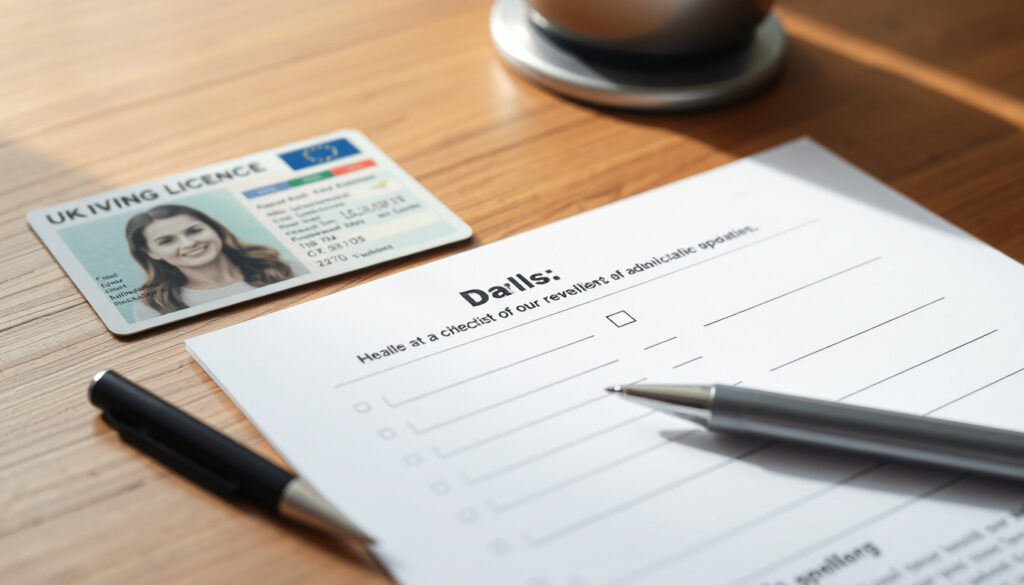
Update Address on Driving Licence – Free DVLA Guide
Keeping your driving licence address current is a legal requirement that many UK drivers overlook after moving house. Failing to notify the DVLA of a change of address can result in fines reaching up to £1,000, yet the process itself costs nothing and can be completed in minutes online. This guide walks through everything you need to know about updating your address on a UK driving licence, whether you hold a full or provisional licence.
The DVLA requires all residents of Great Britain to maintain accurate address records on their driving licence. This applies whether you drive professionally or occasionally, and the same obligations extend to provisional licence holders who have not yet passed their test. Understanding when and how to update your details ensures you stay compliant while avoiding unnecessary penalties.
How Do I Update My Address on My Driving Licence?
Updating your address on your driving licence can be done through two main routes: online via the official GOV.UK service, or by post using the appropriate paper forms. The online method is faster and recommended by the DVLA for most applicants.
Method
Online or by post
Cost
£0 (free)
Processing
Up to 3 weeks
Licence Status
Both full and provisional
The online service requires you to enter your name, gender, date of birth, country of birth, driving licence number, and addresses where you have lived over the past three years. National Insurance and passport numbers should be added when available. Once submitted, a confirmation email arrives immediately, and your new photocard licence typically arrives within seven working days.
Key points to remember:
- The service is entirely free whether you apply online or by post
- You can continue driving legally while waiting for your new licence to arrive
- Once you receive your updated licence, you must cut the old one in half and return it to the DVLA
- Keeping the old licence after receiving the new one is illegal and can result in a £1,000 fine
- Name changes cannot be made online and must be submitted by post
- If you are updating a paper licence rather than a photocard, the process differs slightly
| Aspect | Details |
|---|---|
| Eligibility | Great Britain residents with valid licence |
| Cost | Free (no renewal fee applied) |
| Processing time | Approximately 7 working days, up to 3 weeks if additional checks required |
| Old licence handling | Cut in half and posted to DVLA upon receipt of new licence |
Applying by Post
If you prefer the postal route, you will need to use the appropriate form depending on your licence type. For photocard licences, complete the changes section on the D741 form, which originally came with your licence. If you have lost this form, you can order a replacement from the DVLA. Send the completed form along with your photocard to DVLA, Swansea, SA99 1BN.
Holders of old paper licences must use the D1 form for cars and motorbikes, or the D2 form for lorries and buses. These forms are available from Post Offices or can be requested from the DVLA. Your application should include the completed form, your current licence, identity documents, and a passport photograph. The postal process takes longer than the online option, with processing potentially extending up to three weeks.
Note that the D4 form mentioned in some outdated sources relates to medical fitness declarations and is not relevant for address changes. Always verify you are using the correct form by checking the official GOV.UK guidance before posting your application.
If you are moving temporarily—for example, while attending university—and your permanent address remains reachable, you may not need to update your driving licence address immediately. However, if your permanent contact address changes, you must notify the DVLA promptly.
Is It Mandatory to Update Your Driving Licence Address?
While the DVLA advises drivers to update their address promptly after moving, the requirement is not absolute in all circumstances. The key distinction lies between permanent moves and temporary relocations. If you are changing address because of a university term-time move but your permanent home address remains valid for correspondence, you may not need to update your licence address right away.
However, once your permanent address changes, you should update your driving licence as soon as reasonably possible. The DVLA recommends notifying them within a reasonable timeframe to ensure your licence records remain accurate and any official correspondence reaches you without delay.
Both full licence holders and provisional licence holders have the same obligation to keep their address current. The DVLA system applies equally to all licence categories, and failing to update a provisional licence carries the same potential consequences as failing to update a full licence.
When You Do Not Need to Update
Certain situations do not require a driving licence address update. These include short-term accommodation changes where your registered address remains valid, or when you are between properties but your permanent address on file remains current. The critical factor is whether the DVLA can reliably contact you at the address they have on record.
For Northern Ireland residents, a separate process applies, and the guidance provided here relates specifically to Great Britain. Drivers should consult the appropriate Northern Ireland driver licensing authorities if they reside there.
What Documents Are Required and What Is the Cost?
One of the most appealing aspects of updating your driving licence address is that the process costs nothing. Neither the online nor postal method incurs any fees, and you will not be charged for receiving a new photocard licence showing your updated address.
Required Information for Online Application
When applying through the online service, you will need to have several pieces of information to hand before starting your application. Your driving licence number is essential, as is your National Insurance number. If you know your passport number, this should also be entered, though alternatives for identity verification are available on the GOV.UK website if you do not have your passport to hand.
You must also provide details of all addresses where you have lived over the past three years. This requirement means you should gather dates and addresses for any moves during that period before beginning your application. Having this information ready will make the process much smoother.
Required Documents for Postal Application
For postal applications involving a photocard licence, the D741 form and your current photocard are the main requirements. If applying for a paper licence or if your circumstances require the D1 or D2 forms, you will also need to include identity documents and a passport photograph alongside your application.
The passport number should be included on the postal form where possible. However, if you do not have your passport, GOV.UK outlines acceptable alternatives for identity verification that can be used instead.
Address change: £0 | New photocard: £0 | No renewal fee | Postage: Standard rate only. The entire address update process is free of charge when completed through official channels.
How Long Does It Take to Receive Your Updated Licence?
The processing time for an address update varies depending on the method you choose and whether any additional checks become necessary. The online route offers the fastest turnaround, with most applicants receiving their new photocard licence within approximately seven working days of submitting their application.
If the DVLA needs to conduct additional verification checks, processing can extend up to three weeks. While this is longer than the standard timeline, it remains within acceptable parameters, and applicants should allow this full window when planning their update. For a comprehensive overview of purchasing this popular vehicle, consult our Volvo XC90 for sale guide.
The postal method is inherently slower due to the time required for documents to travel to and from Swansea. Applicants choosing this route should budget up to three weeks for processing and delivery, particularly if they are submitting their application during a busy period.
Throughout the processing period, you can drive legally using your existing licence. The new licence arrives as a separate item, and you should not attempt to drive on the old licence once you have cut it in half and sent it back to the DVLA.
What Happens If You Do Not Update Your Address?
Failing to update your driving licence address when you have permanently changed address carries significant consequences. The DVLA can issue fines of up to £1,000 for drivers who do not notify them of a change of address within a reasonable timeframe. Beyond the financial penalty, driving with outdated licence details can cause complications with insurance claims, vehicle registration, and other administrative matters.
If you are involved in any driving-related incident while your licence address is incorrect, the consequences could be more severe. Insurance companies, the police, and other authorities rely on driving licence records being accurate, and discrepancies can raise questions about the validity of your licence and insurance coverage.
Failure to update your address on your driving licence can result in a fine of up to £1,000. This is not an administrative error—the DVLA treats it as a serious matter when drivers fail to maintain accurate records.
Additional Update Requirements When Moving
Updating your driving licence address is not the only step required when you move house. You should also update your vehicle log book, known as the V5C, and any vehicle tax Direct Debit arrangements linked to your address. If you have a personalised registration certificate such as a V750 or V778, or trailer certificates, these records should also be updated.
Fortunately, updating these records is also free when done through the official GOV.UK service. The step-by-step guide available on the website allows you to update multiple records in one session, saving time and ensuring all your details remain consistent.
Timeline: The Address Update Process
- Gather required information: Collect your driving licence number, National Insurance number, passport number, and details of addresses from the past three years. This preparation takes approximately one day.
- Submit your application: Apply online through GOV.UK or complete and post the appropriate paper form. Online submission takes minutes; postal preparation depends on form availability.
- DVLA processing: Allow approximately seven working days for standard online applications, or up to three weeks for postal applications or cases requiring additional verification.
- Receive new licence: Your updated photocard licence arrives by post. Cut your old licence in half and post it to the DVLA address provided.
- Update vehicle records: Use the GOV.UK service to update your V5C log book, vehicle tax arrangements, and any personalised registration certificates.
What Is Clear and What Remains Uncertain?
| Established facts | Areas with some uncertainty |
|---|---|
| Address updates are free | Peak processing times can extend beyond stated 3-week maximum |
| Online method is fastest | Specific reasons for extended checks are not publicly disclosed |
| You can drive during processing | Availability of digital alternatives beyond current online portal |
| Maximum fine is £1,000 | Exact circumstances triggering fines versus warnings |
Why Keeping Your Address Updated Matters
The DVLA maintains driving licence records not just for administrative purposes, but because accurate records support broader road safety and legal compliance objectives. When your licence address matches your actual residence, you can be reached for important correspondence, your insurance records remain accurate, and any legal proceedings or administrative matters can be conducted properly.
For drivers who hold professional licences or work in industries where driving is central to their employment, an incorrect address can create complications with employer records, DVLA fitness assessments, and other regulatory requirements. Keeping your address current prevents these issues from arising in the first place.
The process is straightforward, costs nothing, and takes only a few minutes when you have the necessary information available. Given the potential penalties and the simplicity of the update procedure, there is little reason to delay notifying the DVLA when you change address.
Drivers are advised to inform the DVLA of any address change as soon as reasonably possible after moving. The official recommendation is to notify within 10 days where practical.
— DVLA guidance on address notification
Summary
Updating your address on your driving licence is a free, straightforward process that you can complete online in minutes or by post if preferred. The process applies to both full and provisional licences, and you can continue driving legally while waiting for your new licence to arrive. Failing to update your address carries potential fines of up to £1,000, making it worthwhile to complete the update promptly when you permanently change address. Remember to also update your vehicle log book and any vehicle tax Direct Debit arrangements through the same GOV.UK service.
Change address on driving licence as soon as possible after moving to stay compliant with DVLA requirements.
Frequently Asked Questions
Can I drive while waiting for my new licence after changing address?
Yes, you can continue driving legally using your current licence while the DVLA processes your address update application.
Do I need to update my address on a provisional driving licence?
Yes, provisional licence holders have the same obligation to keep their address current as full licence holders.
What happens to my old licence when the new one arrives?
You must cut the old licence in half and post it to the DVLA address provided. Keeping it after receiving the new licence is illegal.
Is the address update process different for Northern Ireland residents?
Yes, Northern Ireland has a separate driver licensing process. The guidance provided applies specifically to Great Britain residents.
Do I need to update my vehicle log book when I change address?
Yes, you should also update your V5C vehicle log book, vehicle tax Direct Debit, and any personalised registration certificates through the GOV.UK service.
What documents do I need for a postal address update?
For photocard licences, you need the D741 form. For paper licences, you need the D1 or D2 form, along with your current licence, identity documents, and a passport photograph.
Can I change my name on my driving licence using the online address update service?
No, name changes cannot be made through the online address service. You must apply by post for any name changes to your driving licence.
Do I need to update my address if I am only moving temporarily for university?
Not necessarily, if your permanent address remains valid for correspondence. However, once your permanent address changes, you should update your licence promptly.
More related posts
 Killian Scott – Biography, Partner, Height & Career Facts
 Rory McIlroy – Net Worth, Bio, Wife and Major Wins in 2026
 Bruce Dickinson – Biography, Health, and Net Worth in 2025
 1.93 Meters to Feet – Exact 6 Ft 4 In Converter
 Best Eye Cream for Dark Circles – Top Dermatologist Picks 2025
 Tongue and Groove Cladding – Installation, Woods and Costs Guide
 99 Names of Allah – Meanings, Benefits and Recitation Guide
 East Midlands Airport Arrivals – Live Tracker and Status
