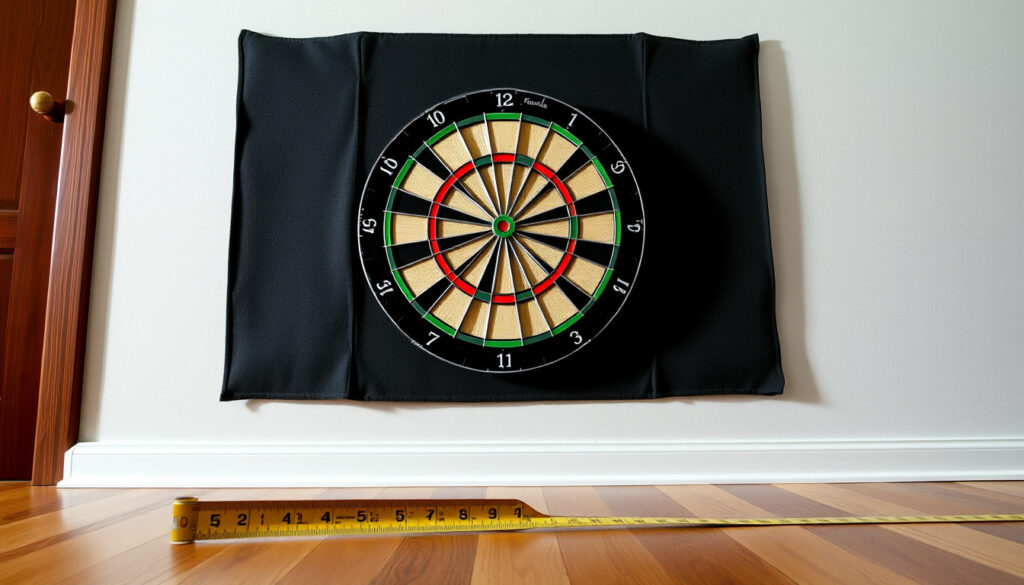
Darts Distance – Official Dartboard Height and Distance Rules
What Is the Correct Dartboard Distance?
Setting up a dartboard with the correct distance and height is essential for fair play and consistent practice. Whether you are installing a board for casual games at home or preparing a dedicated practice area, the measurements used in professional tournaments provide a reliable standard. This guide covers the official dartboard distance in meters, feet, and centimeters, along with the correct height, how to measure it properly, and the key differences between steel-tip and soft-tip setups.
The standard distance for steel-tip darts is governed by major organizations including the Professional Darts Corporation (PDC), the British Darts Organisation (BDO), and the World Darts Federation (WDF). These rules ensure that every player, from amateur to world champion, throws from the same position. Getting this right at home means your practice translates directly to competitive play.
A common point of confusion is whether the measurement is taken from the wall or from the front of the board. Several sources emphasize that the distance should be measured from the front face of the dartboard to the oche (throwing line). Because a dartboard has thickness, measuring from the wall can make the throwing line slightly too short unless the board’s depth is accounted for.
What Is the Official Dartboard Distance?
Official distance (steel-tip): 7 ft 9.25 in (2.37 m) from the front of the board to the oche.
Height: 5 ft 8 in (1.73 m) from the floor to the center of the bullseye.
Throwing line (oche): A raised bar or taped line marking the minimum distance.
Diagonal measurement: 9 ft 7.5 in (2.93 m) from the oche to the bullseye.
- The official distance is standardized by all major darts organizations (PDC, BDO, WDF).
- The distance is the same for both men and women – contrary to a common misconception.
- Soft-tip darts often use a slightly longer distance (8 ft / 2.44 m) in electronic dartboard leagues.
- Home players can use a tape measure or even a simple string to set up accurately.
- A tolerance of ±1 cm is acceptable for recreational play; professional venues require exact measurement.
| Parameter | Value |
|---|---|
| Throw distance (steel-tip) | 2.37 m (7 ft 9.25 in) |
| Throw distance (soft-tip, common) | 2.44 m (8 ft) |
| Height of bullseye | 1.73 m (5 ft 8 in) |
| Diagonal oche to bullseye | 2.93 m (9 ft 7.5 in) |
| Board width | 45 cm (17.75 in) diameter |
| Oche length | Minimum 61 cm (2 ft) for standing |
How Do You Measure the Dartboard Distance Correctly?
Getting the measurement right starts with the board itself. The first step is to mark the center of the bullseye at 173 cm from the floor. Once the board is hung with the bullseye at that height, the distance to the throwing line must be measured from the front face of the board, not from the wall behind it. Several sources highlight that the board has a depth of several centimeters, and ignoring this leads to an incorrect oche position.
For steel-tip play, measure 237 cm from the front face of the board to the front edge of the oche. If you are setting up an electronic board for soft-tip darts, use 244 cm instead. A helpful verification step is to measure the diagonal from the center of the bullseye to the floor at the oche: for steel-tip, this diagonal should be approximately 293 cm. This check can catch errors in either the height or the horizontal distance.
Several sources emphasize that the distance should be taken from the front of the dartboard, not the wall. That matters because the board has thickness, so measuring from the wall can make the oche slightly too short unless the board depth is included. Always measure from the front face of the board to the front edge of the oche.
What Is the Distance from the Dartboard to the Oche?
The oche, also known as the throw line, is the line behind which a player must stand when throwing. For steel-tip darts, the distance from the front face of the board to the front edge of the oche is 2.37 m. For soft-tip darts, it is 2.44 m. The oche itself should be at least 61 cm long to allow a reasonable standing area. This distance is not measured from the wall, but specifically from the board’s front surface.
How Exact Should the Distance Be at Home?
For casual play, a tolerance of about one centimeter in either direction is acceptable. If you are practicing seriously to improve your game for competition, however, it is worth taking the time to match the official distance exactly. A simple tape measure, a long ruler, or even a marked piece of string can do the job. Many online darts distance calculators can also help convert between meters, feet, and inches.
What Is the Correct Dartboard Height and Distance Combination?
The height and distance work as a pair. The bullseye must be exactly 1.73 m from the floor, and the horizontal distance from the board’s face to the oche must be 2.37 m for steel-tip. When both are correct, the diagonal from the bullseye to the oche falls at about 2.93 m. This combination ensures that the board is positioned at a consistent angle and distance for every player.
When hanging the board, it is critical to measure to the center of the bullseye, not the top or bottom of the board. The bullseye is the reference point for both height and diagonal verification. After hanging, check that the board is level and that the throwing area is free of obstructions.
If you want a quick verification, use the diagonal from the bullseye center to the floor at the oche. The steel-tip diagonal is about 293 cm. If this diagonal is off by more than a few centimeters, re-check both the height of the bullseye and the horizontal distance from the board’s face. This single measurement can catch both errors simultaneously.
What Is the Distance from the Dartboard to the Wall?
The distance from the dartboard to the wall is not regulated by any official darts organization. What matters is having enough space to safely retrieve darts and to avoid injury from bounce-outs. A clearance of at least 1.5 m behind the board is recommended, though more space is better. The board itself is usually mounted flush against the wall or on a bracket that keeps it secure.
Is the Dartboard Distance Different for Women or Soft-Tip Darts?
This is a common area of confusion. The official distance and height for darts are identical for all genders. There is no separate “ladies’ distance” in any major darts organization. The PDC, BDO, and WDF all use the same measurements for men and women in all competitions. Any suggestion that the distance should be shorter for women is a myth.
The main variation in distance comes from the type of dart being used. Steel-tip darts use 2.37 m, while soft-tip darts in electronic dartboard leagues often use 2.44 m. This difference exists because of the design of electronic boards and league traditions, not because of the player’s gender. Some soft-tip events use the same distance as steel-tip, so it is always best to verify with the specific tournament organizer.
The official distance is the same for men and women in all major darts organizations. The misconception likely arises from other sports where distances differ by gender, but darts regulations are uniform. Always use 2.37 m for steel-tip and check local league rules for soft-tip variations.
What Is the Timeline of Official Dartboard Distance Regulations?
The distance used today has a history rooted in the standardization of the sport. Understanding this timeline helps explain why the measurement is a slightly odd 7 ft 9.25 in – it originates from an imperial measurement that has been carefully preserved.
- 1920s: Standardization of dartboard dimensions in the UK begins, with early pub leagues agreeing on basic distances.
- 1973: The British Darts Organisation (BDO) sets the official distance to 7 ft 9.25 in, codifying what had become the most common measurement.
- 1992: The Professional Darts Corporation (PDC) adopts the same distance for all professional play, confirming the standard across the sport’s top tier.
- 2000s: Soft-tip leagues introduce an 8 ft distance for electronic boards, creating a separate standard for that format.
- 2020s: The World Darts Federation (WDF) confirms the same distance for steel-tip; no changes are anticipated in the near future.
What Is Certain and What Remains Uncertain About Dartboard Distance?
Some aspects of the official distance are firmly established by multiple authoritative sources, while others involve minor variations or depend on local rules. This section separates what is known with high confidence from areas where caution is needed.
Established information
- The official distance for steel-tip darts is 2.37 m (7 ft 9.25 in) from the front of the board to the oche.
- The bullseye must be 1.73 m (5 ft 8 in) from the floor.
- This distance and height combination is used by the PDC, BDO, and WDF.
- The diagonal from the bullseye to the oche is approximately 2.93 m.
- The distance is the same for male and female players.
Information that remains unclear
- Some sources round the height to 1.73 m while others give 1.7272 m; both are acceptable for practical purposes.
- The diagonal check is given as 9 ft 7⅜ in by some sources and 9 ft 7½ in by others.
- Soft-tip distance varies by league: some use 8 ft (2.44 m), others 2.37 m – always check local rules.
- Home setups may have slight variations of up to ±1 cm; the exactness is less critical for casual play.
Why Does the Dartboard Distance Matter for the Sport?
The distance is designed to ensure fair play and a consistent level of challenge across all venues. By standardizing the throwing position, the sport removes variables and allows skill to determine the outcome. The odd measurement of 7 ft 9.25 in is simply a conversion from the original imperial units used in the UK when the rules were first written. Understanding this history helps appreciate why the number is not a round metric figure.
The diagonal measurement from the oche to the bullseye is often used by experienced players as a quick way to check their setup without needing to re-measure height and distance separately. This practical method has been recommended by retailers and guides for years. Knowing both the horizontal and diagonal distances can help players set up quickly even in unfamiliar venues.
What Do Official Sources Say About Dartboard Distance?
Several authoritative sources confirm the same measurements. The consistency across these references reinforces the reliability of the standard.
“The official dartboard distance is 2,37 meters (7 feet 9¼ inches), measured from the front of the dartboard to the throwline.”
— Dartshopper.co.uk blog (2026)
“For steel-tipped darts matches, the correct distance to stand from a dart board is 7ft 9¼in, or 237cm.”
— Networld Sports buyer’s guide
“Stand at a distance of 7ft 9¼in from front of Dartboard to Oche (throwing line). Centre of Dartboard to Oche should be 9ft 7.5in.”
— Red Dragon Darts
What Is the Best Way to Remember the Key Dartboard Measurements?
The core measurements are simple to commit to memory: the bullseye is at 1.73 m, the throwing line is at 2.37 m for steel-tip, and the diagonal is about 2.93 m. For soft-tip, remember 2.44 m. These three numbers cover the vast majority of setups. If you need a practical guide for your own space, consider following a step-by-step home installation guide that includes a tape-measure method and wall-marking technique. Getting the distance right from the start prevents bad habits and makes practice more effective.
Frequently Asked Questions
What is the darts distance calculator?
A darts distance calculator is a tool that helps you convert between meters, feet, and inches, or automatically compute the diagonal distance. Many online calculators also provide step-by-step setup guides.
How exact should the distance be at home?
For casual play, a tolerance of ±1 cm is acceptable. For practice that mimics competition, try to match the official distance exactly using a tape measure.
What is the distance from the dartboard to the wall?
The distance from the dartboard to the wall is not regulated, but you need enough space behind the board (at least 1.5 m) to safely retrieve darts and avoid injury.
What are the darts rules distance?
The distance is the same for all major darts rules: 2.37 m (7 ft 9.25 in) for steel-tip. Soft-tip may have its own distance (often 8 ft). Always check the specific league or event rules.
What is the difference between steel-tip and soft-tip dart distance?
Steel-tip uses 2.37 m. Soft-tip is often 2.44 m (8 ft) in electronic dartboard leagues, but some events use the same distance as steel-tip. Verify with your tournament organizer.
Is the dartboard distance different for women?
No. The official distance is identical for all genders in the PDC, BDO, and WDF. Any claim of a separate “ladies’ distance” is incorrect.
What is the diagonal distance from the oche to the bullseye?
For steel-tip setups, the diagonal is approximately 2.93 m (9 ft 7.5 in). This measurement can be used as a quick verification of both height and horizontal distance.
Can I use a string to measure the dartboard distance?
Yes. A piece of string cut to 2.37 m and held from the front of the board to the oche is a simple and effective way to get the distance right without a tape measure.
What is the history behind the 7 ft 9.25 in distance?
The distance originates from UK imperial measurements standardized in the early 20th century. When converted to metric, the number became 2.37 m, and it has been retained by all major darts organizations since.
More related posts
 Breaking Bad Jesse Pinkman – Actor, Age, Girlfriend, Fate
 99 Nights in the Forest – Complete Guide with Codes and Tips
 Eddie Redmayne – Wife, Movies, Net Worth and Health Facts
 Share Code Right to Work – Complete 2025 Guide and FAQ
 UK Driving Licence Rules 2025 – Over 70s and Learner Guide
 Cool Wallpaper for Boy – Free 4K, Nike and Ae thetic Theme
 Jason Momoa – Height, Net Worth, Movies and Personal Life
 Cayton Bay Holiday Park – Touring, Reviews & Christmas Events 2025
