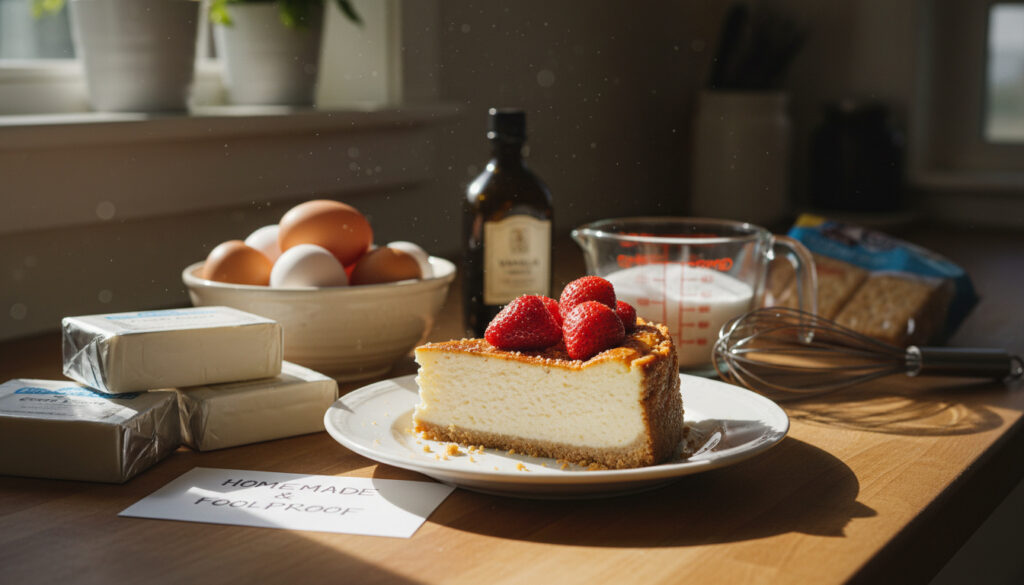
How to Make Cheesecake – Foolproof Step-by-Step Guide
Introduction
Classic New York-style cheesecake delivers a dense, creamy filling composed of cream cheese, eggs, sugar, and sour cream atop a graham cracker crust. The method relies on baking low and slow with a water bath to prevent cracks, yielding a texture that is simultaneously rich and light. Beginner-friendly techniques emphasize room-temperature ingredients and gentle mixing protocols. Explore our classic dessert collection for more traditional recipes.
Preparation requires patience; the dessert demands an overnight chill before serving to develop its signature flavor profile. While variations exist, the foundational baked method remains the gold standard for achieving professional results in home kitchens.
What Ingredients Do You Need to Make Cheesecake?
Standard recipes scale for a 9-inch springform pan, utilizing full-fat dairy components for structural integrity and mouthfeel. Crust specifications call for graham cracker crumbs mixed to wet sand consistency.
Difficulty: Moderate
Key Feature: Water bath required
Best For: Traditional dense texture
Difficulty: Moderate
Key Feature: 40 oz cream cheese
Best For: Intense creaminess
Difficulty: Easy
Key Feature: Gelatin-set filling
Best For: Summer preparation
Note: Recipes vary widely by chef preference.
Difficulty: Unknown
Key Feature: Not established
Best For: N/A
Note: Reliable methods remain unverified.
Critical preparation insights:
- Room-temperature ingredients prevent lumps and ensure emulsification
- Water bath humidity prevents surface cracking during baking
- Gradual cooling inside the oven maintains structural stability
- Overnight refrigeration develops flavor and firm texture
- Full-fat cream cheese delivers essential richness; low-fat alternatives compromise results
- Low-speed egg incorporation minimizes air pockets that cause deflation
- Graham cracker mixture must achieve wet sand consistency before pressing
| Parameter | Specification |
|---|---|
| Prep Duration | 20 minutes |
| Crust Pre-bake | 10 minutes at 350-375°F |
| Filling Bake | 50-90 minutes at 300-325°F |
| Mandatory Chill | 6-24 hours |
| Standard Yield | 12 servings |
| Caloric Density | Approximately 350 per slice |
| Pan Specification | 9-inch springform |
| Refrigerated Storage | 5-7 days tightly wrapped |
| Freezer Storage | Up to 2 months |
| Primary Stabilizer | 4 large eggs (plus optional yolk) |
How to Make Cheesecake: Step-by-Step Instructions
The process unfolds in four distinct phases from crust preparation through final chilling. Classic New York-Style Cheesecake methodology provides the foundational framework.
Pan Preparation and Crust Formation
Preheat oven to 350-375°F. Wrap the springform pan exterior with two layers of heavy-duty aluminum foil to prevent water infiltration during the bain-marie. Coat interior surfaces with baking spray. Combine 1.5 to 2 cups graham cracker crumbs with 6-8 tablespoons melted butter and 2-6 tablespoons sugar until the mixture resembles wet sand. Press firmly into pan bottom and slightly up sides. Bake 10 minutes until set, then cool completely.
Filling Composition
Beat 32-40 ounces of softened full-fat cream cheese at medium speed for 1-2 minutes until completely smooth. Add 1-1.5 cups sugar, 1-3 tablespoons flour or cornstarch, vanilla extract, optional lemon zest, and salt; mix until combined, scraping bowl sides frequently. Incorporate 4 large eggs (plus optional yolk) one at a time on low speed to prevent air incorporation. Fold in 1 cup sour cream last.
Cold cream cheese creates persistent lumps regardless of mixing duration. Allow blocks to soften at room temperature for 60 minutes minimum before beating.
Water Bath Assembly and Baking
Pour batter over cooled crust. Place the springform inside a larger roasting pan. Add boiling water 1-2 inches up the springform sides. Bake at 325°F for 50-90 minutes until perimeter appears set but center retains slight jiggle. Cheesecake Recipe sources emphasize that overbaking initiates cracking and dry texture.
Gradual Cooling Protocol
Turn off oven heat. Crack door ajar and allow cake to cool inside for 60 minutes. Remove from oven, cool to room temperature on counter, then refrigerate uncovered or loosely covered for 6-24 hours minimum.
How Long to Bake Cheesecake and Best Temperature
Temperature control determines the final texture. Video demonstrations confirm that sudden temperature shifts cause structural failure.
Two-Stage Heat Application
Initial crust baking requires 350-375°F for 10 minutes. Filling baking typically begins at higher temperatures (350-400°F) for 15 minutes, then reduces to 300-325°F for the remaining 30-90 minutes depending on oven calibration and pan depth.
Visual Cues for Doneness
The perimeter should appear firm while the center maintains slight wobble when gently shaken. This jiggle indicates proper moisture retention; the center firms completely during the cooling phase. Overbaking eliminates this wobble and results in dry, cracked surfaces.
Why Does Cheesecake Crack and How to Prevent It
Cracks result from overmixing, thermal shock, dehydration, or excessive baking duration. Sally’s Baking Addiction identifies air incorporation as the primary culprit.
Incorporating eggs at high mixer speeds introduces air pockets that expand then collapse during cooling, creating fissures. Always use low speed settings for egg addition.
| Defect | Cause | Solution |
|---|---|---|
| Surface Cracks | Overmixing, absent water bath, rapid cooling | Low-speed mixing, bain-marie method, gradual temperature reduction |
| Dry Crumb | Overbaking beyond jiggle stage | Remove when center wobbles; cool in oven |
| Leaking Crust | Inadequate foil sealing | Double-wrap pan; place on cookie sheet |
| Persistent Lumps | Cold cream cheese | Soften to room temperature before beating |
| Deflation | Excessive aeration | Fold ingredients gently; avoid high-speed blending |
The water bath generates steam that keeps the surface pliable during the initial baking phase. Baker by Nature confirms this technique as essential for crack prevention.
Additional safeguards include adding cornstarch or flour to the batter for structural reinforcement and cooling the dessert gradually inside the oven with the door propped open.
No-Bake Cheesecake: Easy Alternative
While baked methods dominate professional and home baking literature, unbaked variations exist. No-bake versions typically rely on gelatin-set cream cheese combined with whipped topping, though specific recipes vary considerably.
An extra-rich baked variation substitutes standard cream cheese quantities with 40 ounces and increases egg yolk content for enhanced density, as documented by Baker by Nature.
Timeline from Preparation to Service
Total project duration spans approximately 8-26 hours including mandatory chilling.
- Crust Preparation: 10 minutes mixing, 10 minutes baking, 30 minutes cooling
- Filling Assembly: 10-15 minutes combining ingredients
- Baking Phase: 60-75 minutes oven time plus 60 minutes oven cooling
- Counter Cooling: 60-120 minutes to room temperature
- Refrigeration: 6-24 hours minimum for texture development
- Service: Immediate upon slicing after chilling
Established Facts and Remaining Questions
Certain parameters remain variable while others demonstrate consistent outcomes across testing. Review our essential kitchen protocols for additional guidance.
Verified Parameters
- 325°F represents the standard filling bake temperature
- Water bath humidity prevents surface cracking
- Room-temperature dairy ensures smooth batter
- Overnight chilling improves flavor and texture
- Springform pans require foil wrapping
Uncertain Variables
- Exact bake times vary significantly by oven calibration and pan material
- No-bake gelatin ratios not standardized across recipes
- Instant Pot methodologies not yet established
- Optimal altitude adjustments remain unclear
The Craft Behind Classic Cheesecake
The New York-style variant distinguishes itself through density achieved by excluding whipped cream or meringue additions found in other regional styles. The sour cream component provides tang that balances sugar content while contributing to moisture retention.
Common execution errors include insufficient cream cheese softening, resulting in unincorporated lumps, and premature slicing before the 24-hour chill completes, causing slice deformation. Professional results require treating the dessert as a custard rather than a cake, prioritizing gentle heat and moisture retention over rapid cooking.
Sources and Expert Perspectives
Primary methodology derives from Once Upon a Chef, recognized for foolproof novice techniques with video demonstration. Preppy Kitchen contributes emphasis on smooth mixing protocols.
King Arthur Baking provides additional guidance on dairy handling and room-temperature protocols. Storage guidelines reference established baking authorities indicating 5-7 day refrigerated viability.
Final Considerations
Successful cheesecake production requires precision in temperature management and patience during the extended chilling phase. The water bath method, room-temperature ingredients, and gradual cooling protocols constitute non-negotiable elements for crack-free results. Those seeking Classic New York-Style Cheesecake techniques will find the baked method superior to unverified alternatives. For more baking guides, visit our archive.
Frequently Asked Questions
How long does cheesecake last?
Refrigerated storage lasts 5-7 days when tightly wrapped. Frozen storage extends viability to 2 months; thaw overnight in refrigerator before serving.
Do I need a springform pan?
Standard recipes require a 9-inch springform to accommodate the water bath and facilitate clean release. Alternative pans may leak or prevent proper slicing.
Can I freeze cheesecake?
Yes. Wrap individual slices or whole cake tightly in plastic wrap followed by foil. Freeze up to 2 months. Thaw in refrigerator 8-12 hours before consumption.
How do you know when cheesecake is done?
The perimeter should appear set while the center maintains slight jiggle. Overbaking eliminates the characteristic wobble and causes cracking.
What is the best cheesecake temperature?
Bake filling at 300-325°F after an initial higher heat phase. This low temperature prevents cracking and ensures even cooking without collapsing the structure.
Why does my cheesecake crack?
Cracks result from overmixed batter (air pockets), absent water bath, rapid temperature changes, or overbaking. Mix eggs on low speed and cool gradually inside the oven.
More related posts
 Patient Access Sign In – Step-by-Step Guide to Login and Recovery
 Amazon Prime Video Login – Step-by-Step Sign-In Guide
 Kelly Brook – Biography, Age, Height, Husband and Career
 UK National Living Wage 2026 Estimate – £12.71 Rate from April 2026
 Tongue and Groove Cladding – Installation, Woods and Costs Guide
 Will Mellor – A Complete Biography of the British Actor
 Conor McGregor – Net Worth, Record, Next Fight in 2025
 Spongebob Squarepants – Complete Guide to Characters Seasons and Movies
