Things to Do in London – Best Free Attractions 2025
London hosts an exceptional density of free cultural and natural attractions unparalleled among global capitals. Visitors can navigate world-class museums, royal parks, and historic thoroughfares without purchasing a single admission ticket, provided they understand the scheduling nuances and booking requirements that govern peak-season access.
The city’s free offering extends beyond static exhibitions to include interactive science centers, working city farms, and panoramic viewing platforms. Current operational data, seasonal programming for 2025, and visitor-tested strategies shape this comprehensive, budget-neutral itinerary.
What Are the Best Things to Do in London?
London’s attraction landscape divides into four distinct categories, each offering cost-free entry at the foundational level.
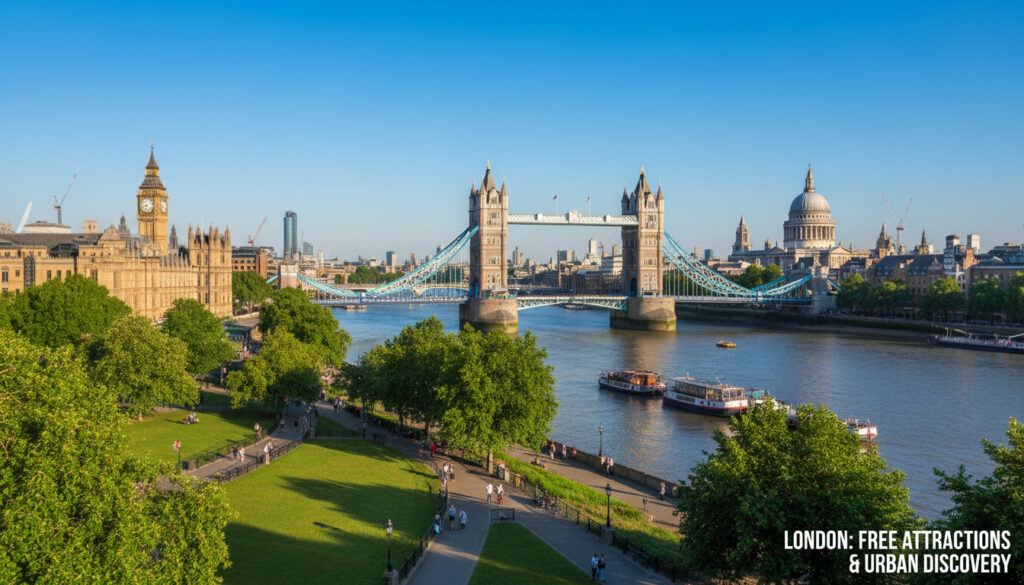
- Iconic Landmarks: The Palace of Westminster, Tower Bridge, and St Paul’s Cathedral provide exterior architectural study without entry fees. The South Bank walkway connects these sites linearly.
- Museums & Culture: National institutions including the British Museum, Natural History Museum, and Science Museum maintain permanent free admission policies funded through public endowments.
- Parks & Markets: Eight Royal Parks comprising 5,000 acres offer deer spotting, boating lakes, and sculptural memorials. Borough Market allows gastronomic sampling without purchase obligations.
- Neighborhood Exploration: Richmond’s riverside, Camden’s canal locks, and the King’s Cross redevelopment provide distinct urban morphologies accessible via public thoroughfares.
- Arrive at the Natural History Museum before 10:00 AM or after 4:00 PM to avoid school-group congestion.
- Book Sky Garden reservations exactly 21 days in advance; the booking window opens at 10:00 AM GMT.
- The South Bank pedestrian route requires no navigation tools; physical sightlines connect Tower Bridge to Westminster.
- Pelican feeding at St James’s Park occurs at 2:30 PM daily regardless of weather conditions.
- Richmond Park’s deer herds require a 45-minute District Line journey from central London and dawn/dusk timing for visibility.
- Coram’s Fields enforces an adults-accompanied-by-children-only policy, creating a secured play environment.
- The King’s Cross Dinosaur Trail operates seasonally from May 2 through September 30, 2025.
| Category | Top Recommendation | Duration | Cost |
|---|---|---|---|
| Natural History | Dinosaur Gallery & Hintze Hall | 3–4 hours | Free |
| Panoramic Views | Sky Garden (Fenchurch Street) | 1–2 hours | Free (advance booking) |
| Royal Parks | Richmond Park (deer spotting) | Half day | Free |
| Interactive Science | Science Museum Garden (ages 3–6) | 2 hours | Free |
| Historic Architecture | Westminster exterior & South Bank | 2–3 hours | Free |
| Agricultural | Vauxhall City Farm | 1 hour | Free (£3 donation suggested) |
What Are the Best Free Things to Do in London?
World Travel Family confirms that the Natural History Museum operates a free timed-ticket system during peak periods, though off-peak walk-up access remains available. The museum’s dinosaur skeletons and suspended blue whale installation constitute the primary visitor draw.
Adjacent in South Kensington, the Science Museum provides hands-on construction and water play through The Garden, open Tuesday through Sunday. The Victoria and Albert Museum and the British Museum in Bloomsbury supplement this cluster with design and archaeological collections, respectively.
Sky Garden and Horizon 22 require reservations released three weeks prior to the visit date. Horizon 22 at 22 Bishopsgate offers the city’s tallest free viewing platform, though capacity limits necessitate planning.
Ground-level attractions include the Victorian Leadenhall Market, the exterior of the Tower of London, and the sand sculptures appearing at low tide along the South Bank foreshore.
What to Do in London with Kids and Family?
Families consulting Kids Activities Near Me – Free Fun will find that London’s offering specifically accommodates younger visitors through secure playgrounds and tactile museum exhibits.
Local Passport Family identifies the Princess Diana Memorial Playground in Kensington Gardens as a standout facility, featuring a wooden pirate ship, teepees, and sensory trails within a gated perimeter.
Interactive Learning Environments
The Science Museum’s Pattern Pod targets toddlers with sensory engagement, while the Museum of London Docklands maintains Mudlarks, a hands-on gallery exploring Thames maritime history with water play tables. The National Maritime Museum in Greenwich offers interactive naval history exhibits suitable for school-age children.
Urban Farms and Animal Encounters
Vauxhall City Farm operates near Waterloo station, housing goats, pigs, and chickens with a suggested £3 donation. Mudchute Farm on the Isle of Dogs and Freightliners City Farm in Islington provide additional agricultural exposure within urban parameters.
St James’s Park hosts pelican feeding ceremonies at 2:30 PM daily adjacent to Duck Island. Richmond Park’s red and fallow deer herds demonstrate crepuscular activity patterns, requiring dawn or dusk observation for reliable sightings.
How to Plan Your London Itinerary?
Three days suffice for central London’s primary free attractions, while five days accommodate peripheral sites such as Greenwich and Richmond. TripAdvisor data indicates that families utilizing free attractions can limit daily expenditure to approximately £10 per person excluding meals, primarily covering Oyster card transport costs.
Three-Day Foundation Schedule
Day one should traverse the South Bank walkway from Tower Bridge to Westminster, incorporating the adventure playground behind the London Eye and the sand play area near Shakespeare’s Globe. Day two focuses on South Kensington’s museum triangle—the Natural History Museum, Science Museum, and Victoria and Albert Museum—paired with the Diana Memorial Playground for afternoon recreation. Day three explores Bloomsbury’s British Museum followed by Regent’s Park boating lake and Coram’s Fields.
The King’s Cross Dinosaur Trail runs exclusively from May 2 through September 30, 2025. Free maps and stickers are distributed at Lightroom on a first-come basis; the trail does not operate outside these dates.
Hidden Gems and Unique Experiences in London?
Rainy Day Alternatives
Inclement weather shifts focus to indoor botanical environments. Sky Garden provides lush greenery and climate protection, while the Science Museum and Natural History Museum offer full-day indoor itineraries. Covered sections of Borough Market allow continued exploration during precipitation.
Evening and Romantic Activities
Silver Spoon London confirms that evening illumination transforms the South Bank into a romantic corridor, with the Houses of Parliament and bridges lit after dusk. Sky Garden offers evening booking slots, though daytime visits provide superior visibility. St James’s Park remains accessible until dusk, offering transitional light photography opportunities.
How Should You Structure a Five-Day Visit?
- Day 1: South Bank Classics — Walk Tower Bridge to Big Ben, utilize the London Eye playground, explore Borough Market, and witness the 2:30 PM pelican feeding at St James’s Park. (Source: World Travel Family)
- Day 2: South Kensington Museums — Natural History Museum dinosaur galleries, Science Museum hands-on Garden, Victoria and Albert Museum, and Kensington Gardens picnic. (Source: Local Passport Family)
- Day 3: Central Parks and Views — Regent’s Park boating, Coram’s Fields water play, British Museum antiquities, and evening Sky Garden reservation. (Source: Silver Spoon London)
- Day 4: Farms and Elevated Perspectives — Vauxhall City Farm, South Bank “beach” area at low tide, Horizon 22 viewing platform, and optional Richmond Park extension. Location Location confirms the farm’s operational status for 2025.
- Day 5: Greenwich and East London — Greenwich Park Thames views, National Maritime Museum exhibits, and Victoria Park playgrounds. Time Out London provides additional East London routing.
What Is Definite Versus Subject to Change?
| Established Facts | Variable or Seasonal Information |
|---|---|
| The Natural History Museum, British Museum, and Science Museum maintain statutory free general admission. | The Science Museum’s Wonder Lab charges admission for children under 12; pricing tiers may adjust. |
| Royal Parks open daily from dawn until dusk without entry fees. | The King’s Cross Dinosaur Trail ends September 30, 2025; 2026 dates remain unconfirmed. |
| Pelican feeding occurs at 2:30 PM daily at St James’s Park, managed by the Royal Parks Foundation. | Sky Garden releases booking slots three weeks in advance; availability fluctuates seasonally and daily. |
| Coram’s Fields restricts adult entry to those accompanied by children. | City farm opening hours vary seasonally; Vauxhall City Farm’s £3 donation remains suggested rather than mandatory. |
Why Does London Offer Extensive Free Access?
The free admission policy at national museums originates from legislative frameworks establishing cultural access as a public utility rather than a commercial enterprise. Institutions including the British Museum and Natural History Museum receive direct government funding to offset operational costs, eliminating the need for entry charges.
The Royal Parks system operates under Crown Estate protections dating to the nineteenth century. These 5,000 acres function as essential urban infrastructure, hosting ecological conservation areas—including Richmond Park’s deer herds—that predate modern metropolitan expansion.
What Do Verified Sources Recommend?
“London offers endless options for families prioritizing free activities. The key is matching attractions to children’s energy levels and weather conditions.”
— World Travel Family
“The South Bank provides a contained route where families can walk from Tower Bridge to Big Ben while accessing multiple playgrounds and the Borough Market food stalls without transport costs.”
— Local Passport Family, 2024
How Should You Prioritize Your London Visit?
Prioritize the South Kensington museum cluster and South Bank walkway for days one and two, as these provide the highest concentration of world-class experiences without admission costs. Book Sky Garden or Horizon 22 immediately upon arrival to secure elevated perspectives. For travelers requiring health preparation before departure, consult an Eye Test Near Me – NHS Guide. Allocate remaining time to Greenwich or Richmond for contrasting urban and natural environments.
Frequently Asked Questions
Is London worth visiting on a tight budget?
Yes. The concentration of free national museums, Royal Parks, and historic landmarks allows comprehensive sightseeing without admission fees. Accommodation and dining represent the primary expenses.
What is the best time to visit London for families?
Late spring through early autumn maximizes outdoor playground and city farm access. However, indoor museums operate year-round, making winter viable for culture-focused trips.
Do I need to book free museums in advance?
The Natural History Museum requires free timed tickets during peak periods. Other major museums generally accept walk-ups, though pre-booking minimizes queue times.
Can adults visit Coram’s Fields alone?
No. This Bloomsbury park restricts entry strictly to adults accompanied by children, maintaining a secure play environment monitored by staff.
Are the city farms completely free?
Yes, though most suggest voluntary donations around £3 per person to support animal care, feed costs, and maintenance operations.
More related posts
 Part Time Jobs Leicester – Your Complete Guide to Flexible Work
 Eid Ul Fitr 2026 – Expected Dates, Significance and Celebrations
 99 Nights in the Forest – Complete Guide with Codes and Tips
 Your Turn Billie Eilish – Scent Profile, Sizes & Where to Buy
 Breaking Bad Jesse Pinkman – Actor, Age, Girlfriend, Fate
 Amanda Redman – What She’s Doing Now in 2025-2026
 Ella Henderson – Biography, Songs, Net Worth & X Factor
 UK National Living Wage 2026 Estimate – £12.71 Rate from April 2026
