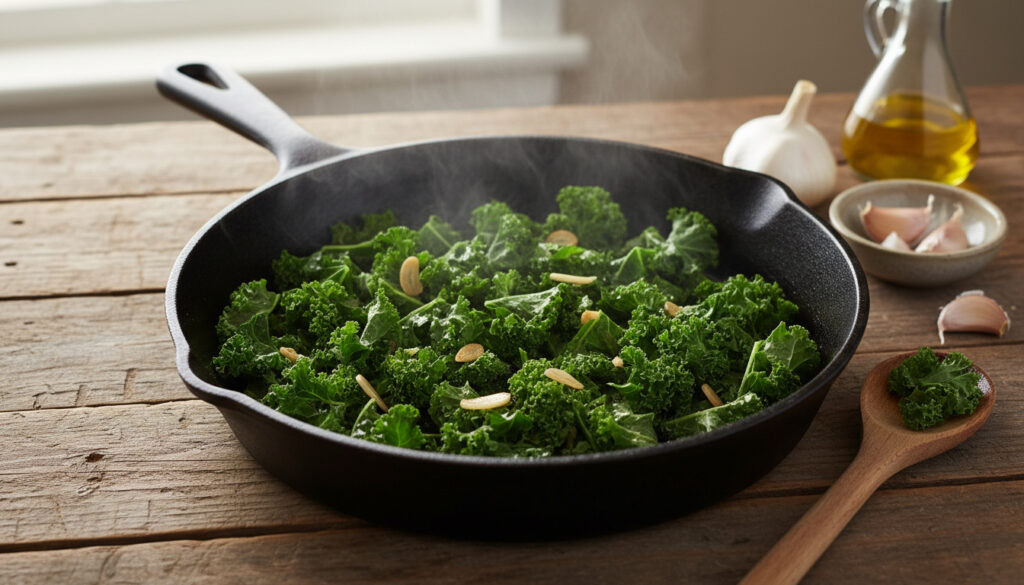
How to Cook Kale – Simple Methods and Pro Tips
Kale has transformed from a garnish to a centerpiece of healthy cooking, though its tough texture and sharp bitterness often intimidate home cooks. Mastering a few fundamental techniques turns this nutrient-dense green into a tender, flavorful side dish or main component.
Whether working with curly, lacinato, or Red Russian varieties, success depends on matching preparation to cooking method. The approach varies significantly depending on whether you seek crispy chips, sautéed tenderness, or steamed softness.
This guide breaks down five verified cooking methods, preparation science, and timing specifics based on culinary testing and nutritional research.
What Is the Best Way to Cook Kale?
Five distinct methods produce reliably different textures and flavors. The optimal choice depends on your timeline, equipment, and desired outcome.
| Method | Time | Tenderness | Best For |
|---|---|---|---|
| Sauté | 2-4 minutes | Wilted, juicy | Weeknight sides |
| Steam | 5-10 minutes covered | Soft, pure | Light meals |
| Roast Chips | 10-20 minutes at 300-350°F | Crispy | Snacking |
| Cast-Iron High-Heat | 30-60 seconds per batch | Crispy edges, juicy center | Texture contrast |
- Lacinato kale requires the shortest cooking time due to its naturally tender, flat leaves.
- Leaving water clinging to leaves aids self-steaming methods, while thorough drying prevents sogginess in roasting.
- Massaging raw leaves with lemon juice for two hours chemically breaks down fibrous cell walls before heat is applied.
- Adding acid at the end of cooking preserves brightness; early addition can dull flavors.
- High-heat cast-iron cooking creates a dual texture—crisp bottom, steamed top—within seconds.
- Curly kale demands longer cooking than flat varieties to achieve similar tenderness.
| Method | Heat Level | Key Technique | Source |
|---|---|---|---|
| Sauté | Medium-high | Add liquid, toss until wilted | The Mom 100 |
| Steam | Medium | Cover wet leaves in oiled pan | The Paupered Chef |
| Roast | 300-350°F | Parchment-lined, massaged dressing | Cardamom & Tea |
| Cast-Iron | High/ ripping hot | Brief batches, cover to steam | YouTube |
| Boil (stems) | Boiling | Stems first, then sauté leaves | Love and Lemons |
| Simple Sauté | Medium | Garlic, salt, lemon finish | 101 Cookbooks |
How Do You Prepare Kale Before Cooking?
Proper preparation determines the final texture more than cooking duration. Coarse stems and residual grit create unpleasant bites regardless of heat application.
Removing Stems and Chopping
Rinse leaves thoroughly under cool water. For steaming methods, leave some water clinging to the leaves; for roasting or sautéing, pat completely dry to avoid sogginess. Love and Lemons recommends discarding the thick coarse stems from curly or lacinato varieties, though thinner stems can be sliced thinly and cooked one minute before adding leaves. Chop or tear leaves into bite-sized pieces to ensure even wilting.
Reducing Bitterness Before Cooking
For raw applications or roasting, massage leaves with lemon juice, oil, or dressing to soften fibers and mitigate bitterness. This mechanical breakdown mimics the tenderizing effect of heat without cooking. Varietal selection also affects pre-cooking preparation; lacinato (dinosaur) kale arrives more tender than curly kale and requires less aggressive massaging.
For raw salads, combine chopped kale with lemon juice and let it marinate for at least two hours. This enzymatic breakdown softens the fibers significantly compared to unmassaged leaves, reducing the need for extensive cooking to achieve tenderness.
How Long Does Kale Take to Cook?
Timing varies by variety age and desired texture. Older leaves require longer cooking than young, tender growth.
Sautéing and Steaming Durations
Sautéing over medium-high heat with oil or butter takes two to four minutes total. Add aromatics like garlic or shallots first for one to four minutes, then introduce kale with a pinch of salt to draw out moisture. The Mom 100 notes that adding garlic in the final minute prevents burning. Steaming via the covered pan method requires five to ten minutes of covered cooking time, using the residual water on leaves to self-steam.
High-Heat and Roasting Methods
Cast-iron high-heat cooking moves rapidly: preheat the skillet until ripping hot, add butter or oil in batches, and cook each batch for thirty to sixty seconds, covering briefly to steam the tops while the bottoms crisp. For kale chips, roasting at three hundred to three hundred fifty degrees Fahrenheit requires ten to twenty minutes, depending on leaf thickness and moisture content.
How to Make Kale Chips?
Kale chips require specific moisture management to achieve crispness without burning. The process works with any variety, though curly kale creates more textured chips due to its ruffled surface.
Remove stems and tear leaves into uniform pieces. Massage with oil, salt, or dressing to ensure even coating—this step prevents the soggy patches that occur when oil pools in crevices. Spread in a single layer on parchment-lined baking sheets. Cardamom & Tea suggests adding cheese or nutritional yeast before baking for umami depth. Bake at three hundred fifty degrees for fifteen to twenty minutes until edges crisp but centers retain slight chew.
Baking at three hundred to three hundred fifty degrees Fahrenheit produces the best texture contrast—crispy edges with a tender center. Lower temperatures may leave leaves limp; higher temperatures risk rapid burning due to kale’s low moisture content.
What Is the Step-by-Step Process for Cooking Kale?
- Preparation (2-3 minutes): Wash leaves, remove thick stems from curly or lacinato varieties, and chop or tear into bite-sized pieces. Massage with lemon if consuming raw.
- Cooking (5-15 minutes): Select method—sauté for two to four minutes, steam for five to ten minutes covered, or roast chips for ten to twenty minutes at three hundred fifty degrees.
- Finishing (1 minute): Add acidic components like lemon juice or vinegar, season with salt, pepper, or red pepper flakes, and serve immediately to preserve texture.
Is It Better to Eat Kale Raw or Cooked?
Both preparations offer distinct nutritional profiles and culinary advantages. The optimal choice depends on specific nutrient goals and digestive tolerance.
| Established Facts | Information That Remains Variable |
|---|---|
| Cooking increases bioavailability of vitamins K, A, and lutein | Exact percentage of glucosinolate reduction varies by cooking duration |
| Steaming and sautéing best retain antioxidants like beta-carotene | Individual tolerance for raw fiber varies significantly |
| Heat destroys vitamin C present in raw kale | Optimal cooking time to balance tenderness and nutrient retention depends on kale age |
| Boiling or steaming reduces oxalates by 30-87%, beneficial for low-oxalate diets | Precise retention of sulforaphane precursors varies by cut size and heat level |
| Raw kale provides crisp texture but requires massaging to reduce toughness | Digestive comfort with raw versus cooked varies by individual gut microbiome |
Why Does Kale Taste Bitter and How Does Cooking Change It?
Kale’s characteristic bitterness stems from glucosinolates, sulfur-containing compounds that activate defensive enzymes when the plant is damaged or chewed. Cooking deactivates myrosinase, the enzyme responsible for breaking glucosinolates into bitter-tasting sulforaphane precursors.
Quick cooking methods like sautéing or high-heat cast-iron sear manage bitterness while preserving cellular structure. Adding acid at the end of cooking—through lemon juice, vinegar, or red pepper flakes—brightens flavor profiles and cuts through remaining bitter notes. This supports eye health through preserved lutein content, a carotenoid that remains stable during quick cooking and contributes to retinal health.
The cooking liquid from boiled or steamed kale contains leached oxalates and glucosinolates; discarding this water further reduces bitterness and potential anti-nutrient effects, making the vegetable suitable for low-oxalate dietary protocols.
What Do Cooking Experts Recommend for Kale?
“The key to great sautéed kale is adding garlic only in the last minute of cooking to prevent burning, then finishing with lemon juice to brighten the flavors.”
— The Mom 100, tested recipe methodology
“Massaging kale with dressing before roasting creates chips with crispy edges and chewy centers, avoiding the uniform dryness that comes from simply baking unprepared leaves.”
— The Paupered Chef, investigative cooking techniques
“High-heat cast-iron cooking for thirty to sixty seconds per batch creates a dual texture impossible to achieve through slow cooking—the bottom crisps while the top stays juicy green.”
— YouTube cooking demonstration, cast-iron technique
What Is the Easiest Way to Start Cooking Kale at Home?
For beginners, the sauté method offers the most reliable entry point. Using lacinato kale for its natural tenderness, heat oil over medium-high heat, add the leaves with a splash of water, and toss for two to four minutes until wilted. Finish with garlic, salt, and lemon juice. This technique requires minimal equipment, works with health benefits similar to raw consumption, and produces consistent results across different stovetops.
Frequently Asked Questions
Can you eat kale raw?
Yes, though massaging the leaves with lemon juice for at least two hours softens the fibers and reduces bitterness. Raw kale retains more vitamin C than cooked preparations.
What seasonings go well with kale?
Garlic, lemon juice, red pepper flakes, sea salt, black pepper, vinegar, Parmesan, pecorino, and nutritional yeast complement kale’s earthy flavor. Add acidic ingredients at the end of cooking to preserve brightness.
How do you make kale less bitter?
Quick cooking over high heat, adding lemon or vinegar after cooking, and massaging raw leaves with acid all reduce bitterness by managing glucosinolate compounds without destroying texture.
Which kale variety cooks fastest?
Lacinato (dinosaur) kale and Red Russian kale cook faster than curly kale due to their more tender leaf structure and thinner cell walls.
Is kale suitable for keto diets?
Yes, cooked kale contains approximately three grams of net carbohydrates per cup, making it compatible with ketogenic protocols when prepared with high-fat additions like butter, oil, or cheese.
How should leftover cooked kale be stored?
Refrigerate in an airtight container for three to five days. Reheat gently to avoid mushiness, or consume cold in salads with additional acid to refresh the flavor.
More related posts
 Spongebob Squarepants – Complete Guide to Characters Seasons and Movies
 FC Barcelona vs RCD Mallorca Lineups – Latest Predictions
 New Toyota Land Cruiser – 2026 UK Prices and Specs
 Best NMN Supplement UK – Top Picks for 2025 Purity & Quality
 Sophie Ellis – Biography, Age, Husband and Career in 2025
 Tymo Curl Pro Plus – Extended Barrel Curler Guide
 Best Eye Cream for Dark Circles – Top Dermatologist Picks 2025
 Deportivo Alavés vs Real Madrid Stats – Head-to-Head Breakdown
