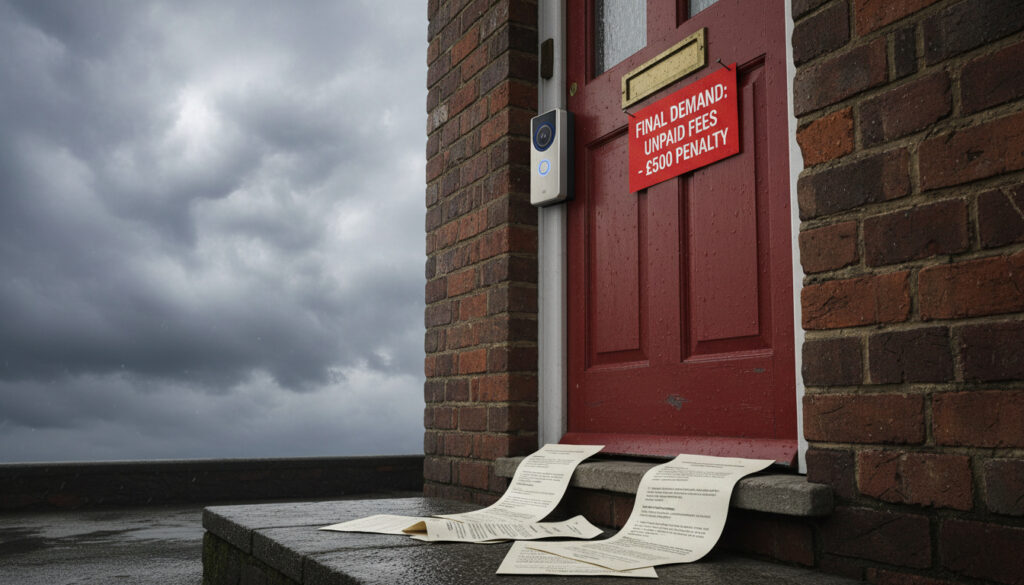
Video Doorbell Rules Fines – UK Laws Homeowners Need
Video doorbells have transformed home security, offering residents real-time monitoring of their doorways and driveways. These devices stream footage directly to smartphones, capturing deliveries and visitors with unprecedented convenience. Yet this technology carries significant legal obligations that many owners overlook.
Homeowners across the United Kingdom increasingly face penalties for improper installation. The Information Commissioner’s Office (ICO) can issue substantial fines under data protection laws, while civil courts have ordered damages exceeding £100,000 for privacy breaches. Understanding the boundary between legitimate security and unlawful surveillance has become essential for anyone considering these devices.
Can You Get Fined for a Video Doorbell?
Generally legal if compliant with data protection laws
Up to £100,000+ under GDPR for serious breaches
No filming beyond property boundary without justification
UK councils, US HOAs, shared housing blocks
- Homeowners face substantial financial penalties for non-compliant installations that capture public spaces
- The Information Commissioner’s Office possesses direct authority to issue fines under UK GDPR regulations
- The 2021 case of Fairhurst v Woodard established liability exceeding £100,000 for unlawful surveillance
- Recording public footpaths or neighboring properties without specific justification triggers immediate legal exposure
- Users become legal “data controllers” subject to strict obligations when cameras film beyond property boundaries
- Continuous recording significantly increases compliance risk compared to motion-activated-only systems
- Both regulatory fines and individual civil compensation claims present viable enforcement mechanisms
| Aspect | Details | Basis |
|---|---|---|
| Maximum Financial Penalty | Exceeds £100,000 in damages (civil cases) Source | Case Law |
| Primary Regulatory Body | Information Commissioner’s Office (ICO) | Government |
| Governing Legislation | UK GDPR and Data Protection Act 2018 | Statute |
| Precedent Case | Fairhurst v Woodard (2021) | Case Law |
| Compensation Pathway | Claims available from privacy infringement victims Source | Policy |
| Geographic Restriction | Must avoid recording outside property without compelling justification | ICO Guidance |
| Legal Classification | User designated as “data controller” when filming public areas Source | Legislation |
| Recent Legislative Update | Data (Use and Access) Act effective June 2025 Source | Statute |
What Are the Key Rules for Video Doorbells?
Operating a video doorbell within legal boundaries requires adherence to specific technical and procedural standards. Security legislation guidelines confirm that while monitoring your own front door remains permissible, capturing footage beyond your property line transforms you into a data controller with statutory obligations.
Property Boundary Compliance
Cameras must focus exclusively on your own doorway, pathway, or driveway. Recording public rights of way, neighboring entrances, or shared spaces such as block car parks demands rigorous compliance with data protection frameworks. Property management specialists note that compelling justification must exist for any external recording.
Activation and Recording Modes
ICO guidance recommends configuring devices to activate solely when the doorbell is pressed, rather than maintaining continuous surveillance. This limitation reduces the volume of personal data captured and strengthens compliance positions.
Angle your camera to capture only your immediate doorway and steps. Avoid sightlines into neighbor’s windows, gardens, or private entrances to minimize data protection risks.
Public Notification Requirements
Appropriate signage must inform visitors and passersby that surveillance operates at the location. When public space recording proves unavoidable, housing experts recommend creating written privacy statements explaining the specific purpose of monitoring.
What Privacy Laws Apply to Video Doorbells?
Multiple legal frameworks govern these devices, creating a complex compliance environment for residential users. The Human Rights Act applies alongside specific data protection statutes.
UK GDPR and Data Protection Act 2018
These statutes form the primary regulatory backbone, establishing users as data controllers when filming extends beyond property boundaries. The legislation mandates specific technical safeguards and procedural accountability.
Users must implement strong passwords with two-factor authentication, ensure encryption of stored footage, retain recordings only as long as necessary, and conduct formal Data Protection Impact Assessments addressing lawful basis and individual rights impacts.
Security and Storage Protocols
Encryption represents a mandatory requirement for stored footage. Access controls must prevent unauthorized viewing, with regular software updates maintaining system integrity against emerging vulnerabilities.
Non-compliance exposes users to ICO enforcement action, legal challenges from affected individuals, and substantial compensation claims from privacy infringement victims.
Can Neighbors Complain About My Video Doorbell?
Neighbor disputes represent the most common trigger for regulatory intervention. Legal frameworks permit affected parties to initiate formal complaints when surveillance captures their private property or habitual movements.
Valid Complaint Grounds
Complaints gain traction when cameras record private gardens, windows, or entrances without consent. Lack of proper signage or excessive retention periods further strengthen neighbor positions in disputes.
HOA and Municipal Restrictions
United States residents face additional layers through Homeowners Association covenants, which may impose restrictions beyond state law. Hardware Store Near Me – Chains, Hours and Finder Guide offers resources for locating installation professionals familiar with local regulations.
How to Avoid Fines with a Doorbell Camera?
Proactive compliance measures eliminate most legal risks. Positioning cameras to exclude neighboring properties remains the fundamental precaution. Implementing motion-only recording, posting clear signage, and conducting regular data protection assessments create defensible positions against regulatory scrutiny.
Technical configurations should limit retention periods to the minimum necessary for security purposes. How to Withhold Number – Hide Caller ID on Any Phone demonstrates similar privacy-protection strategies applicable to surveillance contexts.
How Have Video Doorbell Laws Changed Over Time?
- – Data Protection Act 2018 receives Royal Assent, establishing post-Brexit data protection frameworks including specific CCTV provisions.
- – Fairhurst v Woodard becomes the first domestic CCTV case in England and Wales. Court records confirm over £100,000 in damages for filming public footpaths and neighbor property.
- – CHS Group Policy published formalizing domestic CCTV guidelines for housing associations, clarifying compensation claim procedures.
- – Data (Use and Access) Act becomes law, prompting ICO review of smart doorbell guidance.
What Is Certain and Uncertain About Video Doorbell Laws?
| Established Facts | Uncertain or Variable Areas |
|---|---|
| Monitoring your own doorway and immediate pathway is legally permissible | Specific fine amounts for minor technical violations remain unspecified by regulators |
| UK GDPR applies when filming extends beyond property boundaries | Exact thresholds for “compelling justification” to film public spaces lack precise definition |
| ICO possesses authority to issue enforcement fines | HOA restrictions vary significantly between individual associations and states |
| Signage is mandatory where surveillance operates | Council-specific enforcement priorities differ across UK jurisdictions |
Why Do Video Doorbell Laws Exist?
These regulations emerged from the tension between residential security needs and fundamental privacy rights. The proliferation of internet-connected cameras created unprecedented opportunities for mass surveillance of public spaces by private individuals, prompting legislators to apply data protection principles to domestic settings.
ICO surveillance guidance reflects concerns about function creep, where security footage serves purposes beyond crime prevention, potentially tracking neighbors’ daily routines or visitors to sensitive locations.
What Do Legal Experts Say About Enforcement?
“The defendant had installed four video cameras at his property that filmed individuals on a public footpath. The court ruled he had breached both the UK Data Protection Act 2018 and UK GDPR, establishing that homeowners must be cautious about the implications of video surveillance.”
— Downs Law Analysis, Fairhurst v Woodard Case Review
“When a video doorbell captures images beyond your property boundary, you become a data controller with specific legal obligations including encryption, retention limits, and impact assessments.”
— Armour Security, Video Doorbell Legislation Guide
What Should You Remember About Video Doorbell Compliance?
Video doorbells remain legal security tools when confined to your own property. The critical distinction emerges when cameras capture public spaces or neighboring homes, triggering data controller status under UK GDPR. Compliance demands proper signage, limited retention periods, strong encryption, and ideally, motion-only activation. The 2021 Fairhurst judgment demonstrates that failure to respect these boundaries carries financial consequences exceeding £100,000, while the 2025 Data Act promises continued regulatory evolution.
Common Questions About Video Doorbell Regulations
Do I need permission to install a video doorbell on my own house?
No permission is required for installation on private property, provided the camera captures only your doorway and immediate grounds. Planning restrictions may apply to listed buildings or conservation areas.
Can I record the pavement in front of my house?
Recording public pavements requires compelling justification and compliance with data protection laws. You must display signage and become a registered data controller, facing potential ICO fines for non-compliance.
How long can I legally keep doorbell footage?
UK GDPR mandates storage limited to the minimum necessary period, typically days or weeks rather than months. Retain footage only while needed for specific security investigations or incident reviews.
What should I do if my neighbor complains about my camera?
Immediately review your camera’s field of view to exclude their property. Provide your privacy policy and data retention schedule. If filming their area is unavoidable, prepare a Data Protection Impact Assessment explaining your lawful basis.
Are wireless doorbells subject to the same rules as wired systems?
No. Data protection law applies based on footage captured, not connectivity method. Both wireless and wired systems trigger identical GDPR obligations when recording beyond property boundaries.
Can landlords install doorbells on rental properties without tenant consent?
Landlords must respect tenant privacy rights. Installation affecting tenant access or recording their private areas requires consultation. Tenants retain rights regarding data captured of their visitors and activities.
Does night vision recording change the legal requirements?
Infrared or night vision capabilities do not alter data protection obligations. However, enhanced visibility into otherwise dark neighboring areas may increase privacy intrusion risks and strengthen complaint grounds.
More related posts
 Jason Momoa – Height, Net Worth, Movies and Personal Life
 1000 Yen in Pounds – Current Rate and Trends
 Divorce Solicitors Near Me – Fixed Fees, Legal Aid and Free Consults
 Eddie Redmayne – Wife, Movies, Net Worth and Health Facts
 19 Stone in KG – Exact 120.66 Kilogram Conversion
 Your Turn Billie Eilish – Scent Profile, Sizes & Where to Buy
 Kelly Brook – Biography, Age, Height, Husband and Career
 Best Eye Cream for Dark Circles – Top Dermatologist Picks 2025
